

03.02 / Care
Maintenance and ServiceDesk.
A monthly retainer for software already in production: two separate budgets of senior hours, planned maintenance and urgent work, run through a ServiceDesk your team uses by email, with a full audit and a written report every month.
- Lighthouse mobile: accessibility, best practices, SEOKD.tech
- 100 / 100 / 100
- indexable URLs, Spanish and EnglishHotel Talavera
- 16
In detail
What you should know.

For example: 100 / 100 / 100 Lighthouse mobile: accessibility, best practices, SEO. KD.tech
What it is
Polargate CARE is a monthly retainer for software that is already live: a website, an internal portal, a product or a mobile app. It buys two separate budgets of senior hours. The first covers planned maintenance: dependency and framework updates, security headers and policies, accessibility and performance regressions, content changes, analytics and search hygiene. The second covers urgent work: a form that stopped sending, a broken deploy, a page returning a 404, a third party that changed its API overnight. We keep the two apart on purpose, because when they share one pool the urgent work eats everything and the planned work never happens.
How we do it
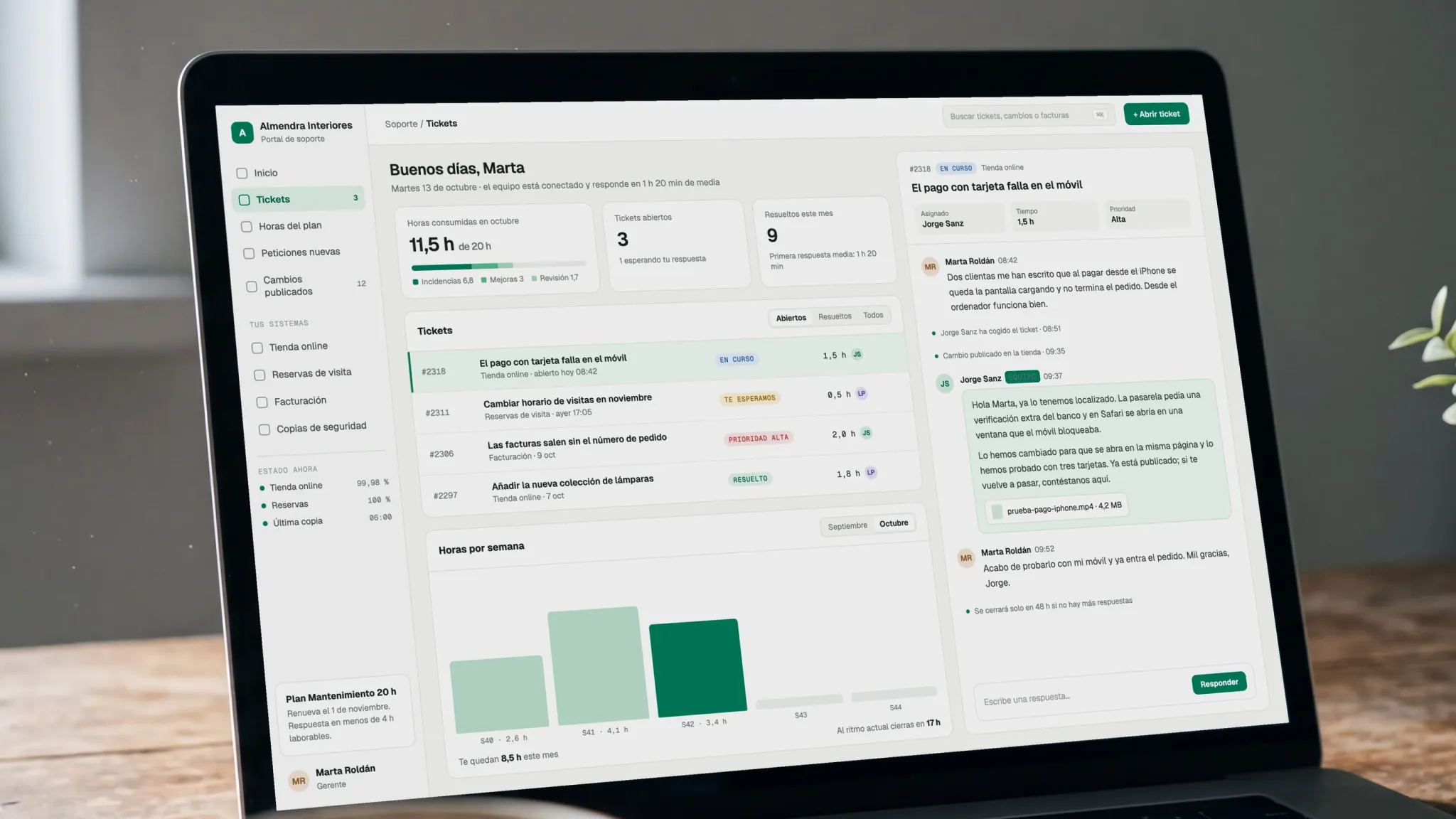
Every client gets their own tenant in our ServiceDesk. You report a problem by writing to one email address, or from the portal, and both arrive in the same place: mail flows into and out of the ticket, so nobody on your side has to learn a new tool. Each ticket carries a priority, an owner and a full history, attachments stay private to that ticket, and every hour logged is charged to one of the two budgets, so the balance is visible while the month is running and not only when the invoice arrives. Routine fixes are prepared by our AutoFix agent, and a senior engineer reviews every change before it reaches production. Once a month we audit the whole thing: security, accessibility, performance, structured data, search and AI visibility, dead code. On Hotel Talavera one of those audits produced 48 confirmed findings, all fixed in a single month.
What you get
What you take away.
Everything is written down before we start, and everything stays in accounts your company owns.
01Deliverables
- 01
Two separate monthly hour budgets, one for planned maintenance and one for urgent work, tracked apart
- 02
Your own tenant in our multi-tenant ServiceDesk, with ticket priorities, owners, full history and per-ticket private attachments
- 03
Email in and email out: your team reports by writing to one address and replies land back in their inbox
- 04
Live hour balance in the client portal, so you see what is left while the month is still running
- 05
Monthly audit of security, accessibility, performance, structured data, dependencies, search and AI visibility
- 06
Written monthly report: work shipped, hours used per budget, audit findings and the plan for the next month
- 07
Dependency, framework and security updates applied, tested and verified before they reach production
- 08
Automated health checks on the live system, with alerts coming to us instead of to you
02How it runs
- 01 · Week 1 to 2
Takeover and baseline audit
We take access to the repository, hosting, database, domain and analytics, then audit the live site from the outside and the code from the inside. You get a ranked list of findings and a short risk register, so you see the real state of what you own before anything is touched.
- 02 · Week 2 to 4
Close the critical findings
Critical issues go first: security headers, exposed permissions, soft 404s, broken indexation, performance blockers. Each fix travels as a reviewed pull request and is deployed with your approval, so the retainer starts from a clean, known baseline instead of inheriting debt quietly.
- 03 · Every month
The monthly cycle
Tickets flow through the ServiceDesk against your hour pool, the scheduled audit runs over the live site and the repository, and the fix agent proposes changes as pull requests. A human reviews and merges. At the end of the month you get a report of what changed, why and at what cost in hours.
- 04 · Every quarter
Review and re-plan
Every quarter we look at consumption, recurring issues and what the product needs next. The hour pool is resized up or down to match reality, evolution work is agreed as a small roadmap, and anything that has grown into a project is quoted separately instead of eating the retainer.
For example: 16 indexable URLs, Spanish and English. Hotel Talavera
Who it is for
We don't take every project.
We would rather tell you now than halfway through. If you recognise yourself on the left, let's talk.
It fits if
- You have software in production that your business needs every day
- You want a senior team that answers, not a ticket queue with no owner
- You prefer a known monthly fee to surprise hourly invoices
- You are fine with an agent proposing fixes as long as a person reviews every change
It is not for you if
- You need round-the-clock cover with a response in minutes
- You want changes in production without anyone reviewing the diff
- You are only looking for cheap hosting
- Nobody can give us access to the code or the servers
For example: 327 bilingual pages in the sitemap accepted by Search Console. KD.tech
Timing and budget
How we quote.
No price list and no hourly billing during a build. After a short call you get a written quote for your project.
- Timeline
- Setup in the first two weeks (access, health checks, your ServiceDesk tenant and a first audit), then a monthly cycle of planned work, tickets and report. Minimum three months, month to month after that.
- Team
- Your tickets go to our team, which answers them, fixes them and writes the monthly report, with design, content or paid media when a ticket needs it. Pedro Ciordia, CTO, reviews every fix before it ships.
- How the price is set
- A monthly fee sized to the system and how critical it is, quoted privately. Budget sizes and price reviewed every quarter; anything outside the budgets is quoted before it starts.
- The stack
- SupabasePostgreSQLVercelResendGitHubGitHub ActionsClaudeMCPTypeScriptVitestPlaywrightSearch ConsoleGA4
For example: 27 published FAQs with FAQPage schema. Hotel Talavera
Work
Where we did it.
Real projects. Open each one to see what we built and the figures we measured.
KD.tech
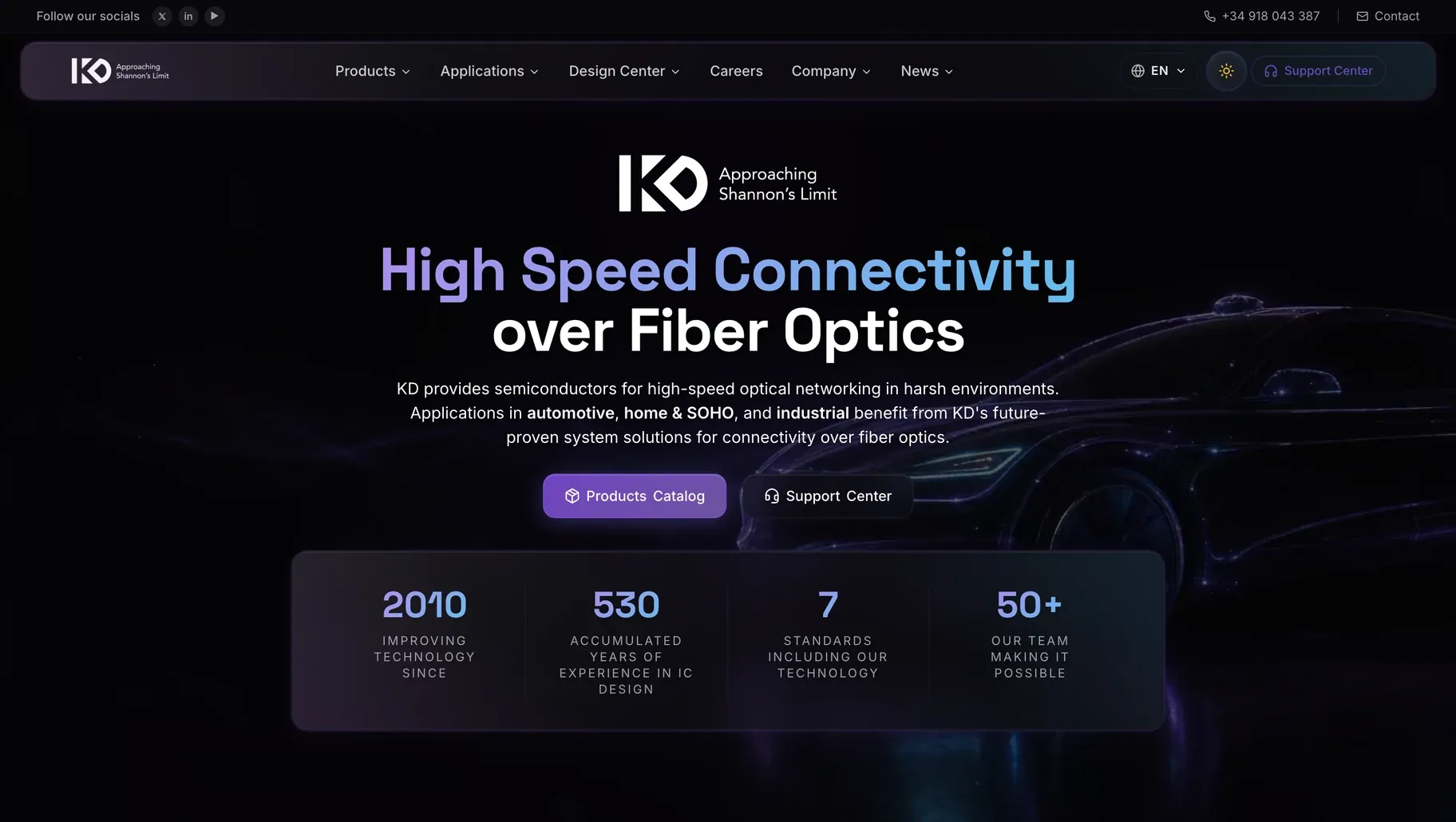
Semiconductors and automotive optical connectivityOne platform for a semiconductor company: site, ServiceDesk and admin portal on a single codebase
327 bilingual pages in the sitemap accepted by Search Console
BuildGrowCare

Hotel Talavera
Hotels and hospitalityA bilingual hotel website that crawlers and AI assistants can read
27 published FAQs with FAQPage schema
BuildGrowCare
For example: 22 customer tickets resolved through the desk, April to July 2026. KD.tech
Same line
Other services in Care.
Each service has its own page with what it includes, the usual timeline and the projects where we did it.
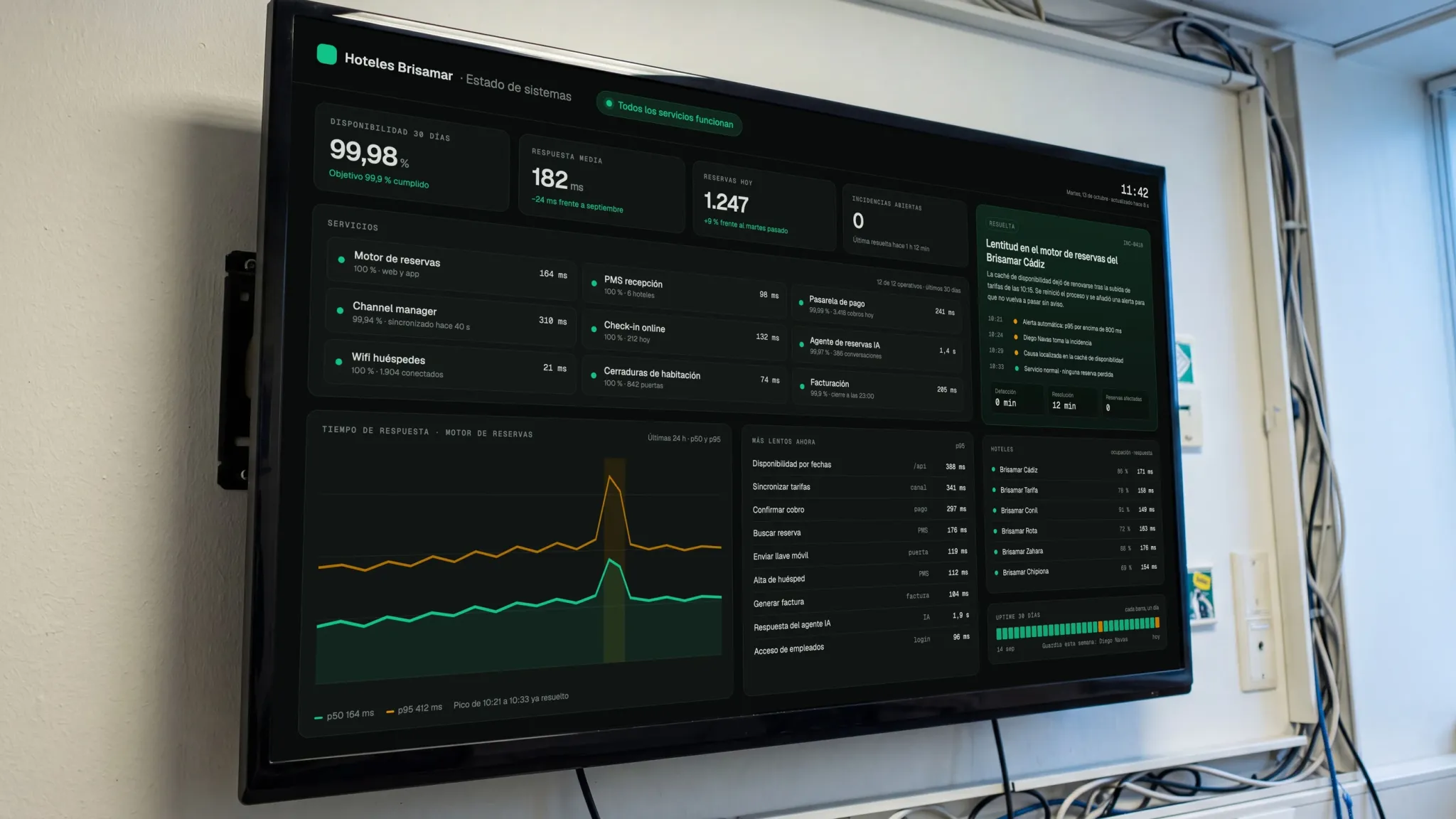
- 01Monitoring and evolutionWe watch what is live, and improve it every quarter.
- 03Security hardeningWe harden what is already live and measure it before and after.
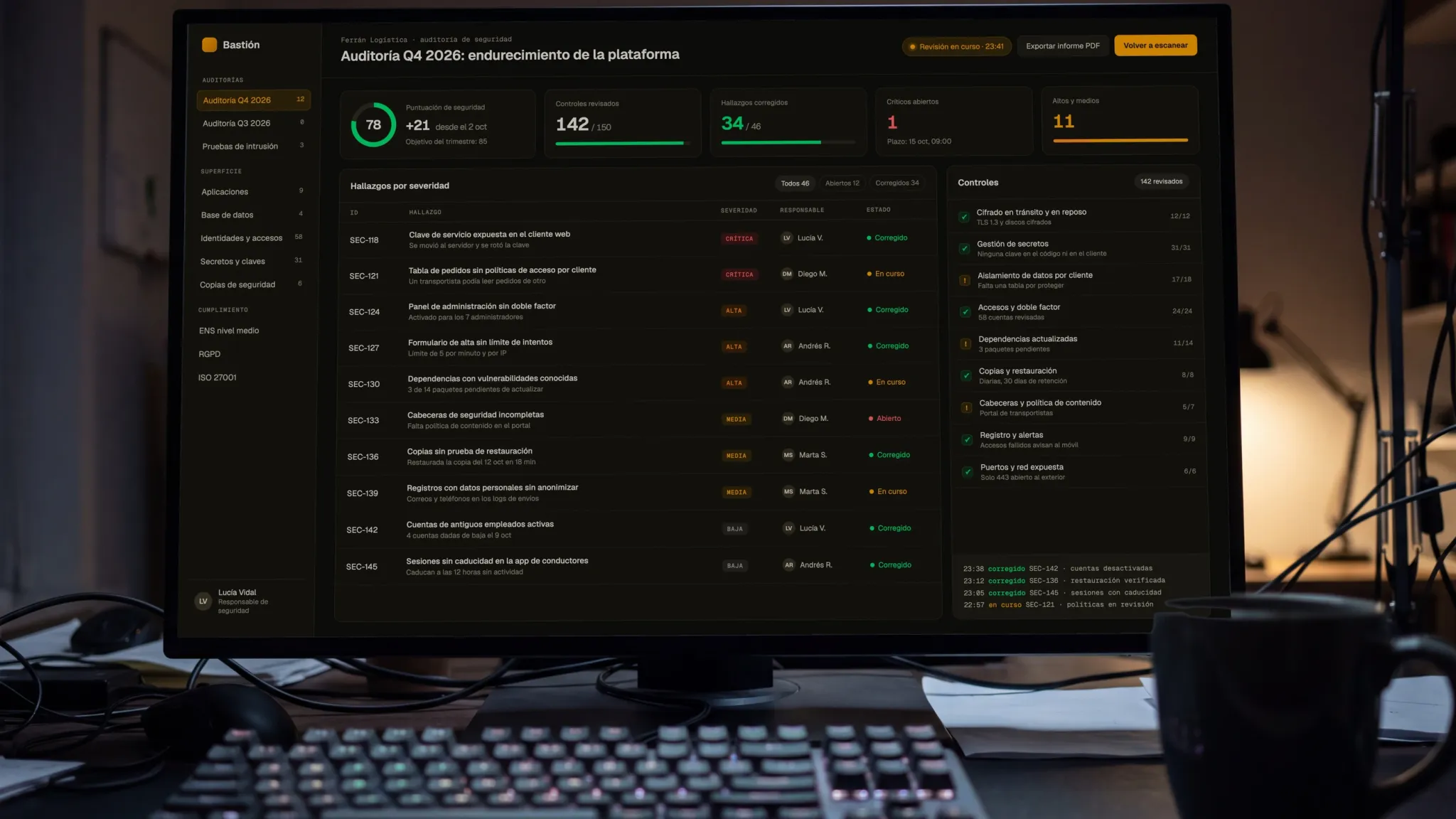
For example: 48 audit findings confirmed and fixed. Hotel Talavera
FAQ
What people ask us.
How much does website and software maintenance cost per month?
What is included in the retainer and what is billed separately?
How fast do you respond when something breaks on our site?
How long is the minimum contract and how quickly can we start?
Can you maintain a website or app that another agency built?
What happens to the hours we do not use in a month?
For example: 20 h senior maintenance hours per month under contract. KD.tech
Get started
Tell us what you want to build.
Websites, apps, custom systems and AI for companies that need them in production in weeks. Fill in the form or book a 30 minute call: a senior engineer answers within 48 business hours with a first take on scope, timeline and price.
First step
Two weeks to close scope, architecture and price before anything is built.
No price list. You get a private quote, in writing, after a short call.
Then, to build, always at a fixed price
Not ready yet?
- AI visibility auditOne-off, fixed price.