What a Discovery Sprint is
A Discovery Sprint is two weeks of paid senior work that turns a vague intention ("we need a new portal", "we want AI somewhere in our operation") into a decision you can sign or refuse with your eyes open. Polargate runs one before every build, and it is the only way a BUILD project starts with us. It costs from 4,900 EUR, and half the fee is credited against the build if you commission it within 60 days.
It is not a workshop, not a pitch, and not a free proposal with your logo on the cover. It is billable product and engineering work: reading the systems you actually run, talking to the people who do the job today, drawing the architecture, naming the risks and putting one price on the result.
What you get: the decision pack
The deliverable is a written pack, handed over and walked through with your team. It contains five things.
- Scope. What phase one includes, module by module, and what it explicitly excludes. The exclusions are the part that saves the relationship six months later.
- Architecture. The stack, the data model with an entity diagram, the integrations with what you already run, where the code lives and where your data lives.
- Risks. Everything that can move the date or the price, named, each with a mitigation: an API with no sandbox, a migration from a system nobody documented, mobile app store review, a process that lives in one person's head, unclear data ownership.
- A fixed price and a plan. One number for the scope as written, split into phases, with the payment schedule and what we need from you and when.
- A recommendation. Including, when it applies, "do not build this yet", "fix the process first" or "buy something off the shelf".
From Polargate's own work: in one discovery for an internal operations platform, the pack came out of five live operational spreadsheets and a five-phase process map. We extracted the data model from them and closed twelve open modelling questions with the client before a line of code existed. The scope document was then attached as an annex to the contract, which is where a scope document belongs.
Why paying for it protects you
Because unpaid scoping is not scoping, it is selling, and you pay for it anyway, later and with less control.
A free proposal is a sales document
An agency that scopes for free has to recover that unpaid time inside the price of the projects it wins, and it has to guess, because nobody spends senior hours on a deal they may lose. Guessing has two outcomes and both cost you money. The optimistic quote wins the work, meets reality in month three and comes back as change requests. The defensive quote pads every unknown, and you pay for padding you never needed.
Paying changes what you are allowed to ask
When discovery is billed, the two weeks go where the risk is instead of where the sales story is. You give read access to the ugly parts, we interview the people who will have to live with the system, and you get answers no pitch will give you, including "this is harder than you were told" and "the thing you asked for is not the thing that hurts".
The decision is worth more than the fee
The expensive failure in mid-market software is rarely a bad developer. It is six months of competent work built on a scope written in two pages. Two weeks of scrutiny is cheap against that, and the pack is useful even when the answer is no. One Polargate engagement began as an off-the-shelf ERP installation. Studying it showed the fit was poor, so the ERP was dropped and a custom platform was built instead. That decision cost weeks of study, not a year of licences and configuration.
Paying for discovery is normal practice in this market, at a range of prices. Published examples from 2026: Lienzzo in Valencia sells an AI diagnosis at 990 to 2,500 EUR, deducted in full if the implementation is contracted; decivo in Germany publishes an Innovation Workshop at 7,500 EUR; Eli5 in Amsterdam sells a two-week Blueprint at 10,000 EUR ahead of an implementation from 25,000 EUR. Polargate's 4,900 EUR sits at the accessible end of that range, and half of it comes off the build price if the build starts within 60 days.
How the two weeks run
Week one is evidence. Week two is design, price and a written answer.
- Days 1 and 2: kickoff with the decision maker. Goals, constraints, the budget you actually have, and read-only access to the systems in scope.
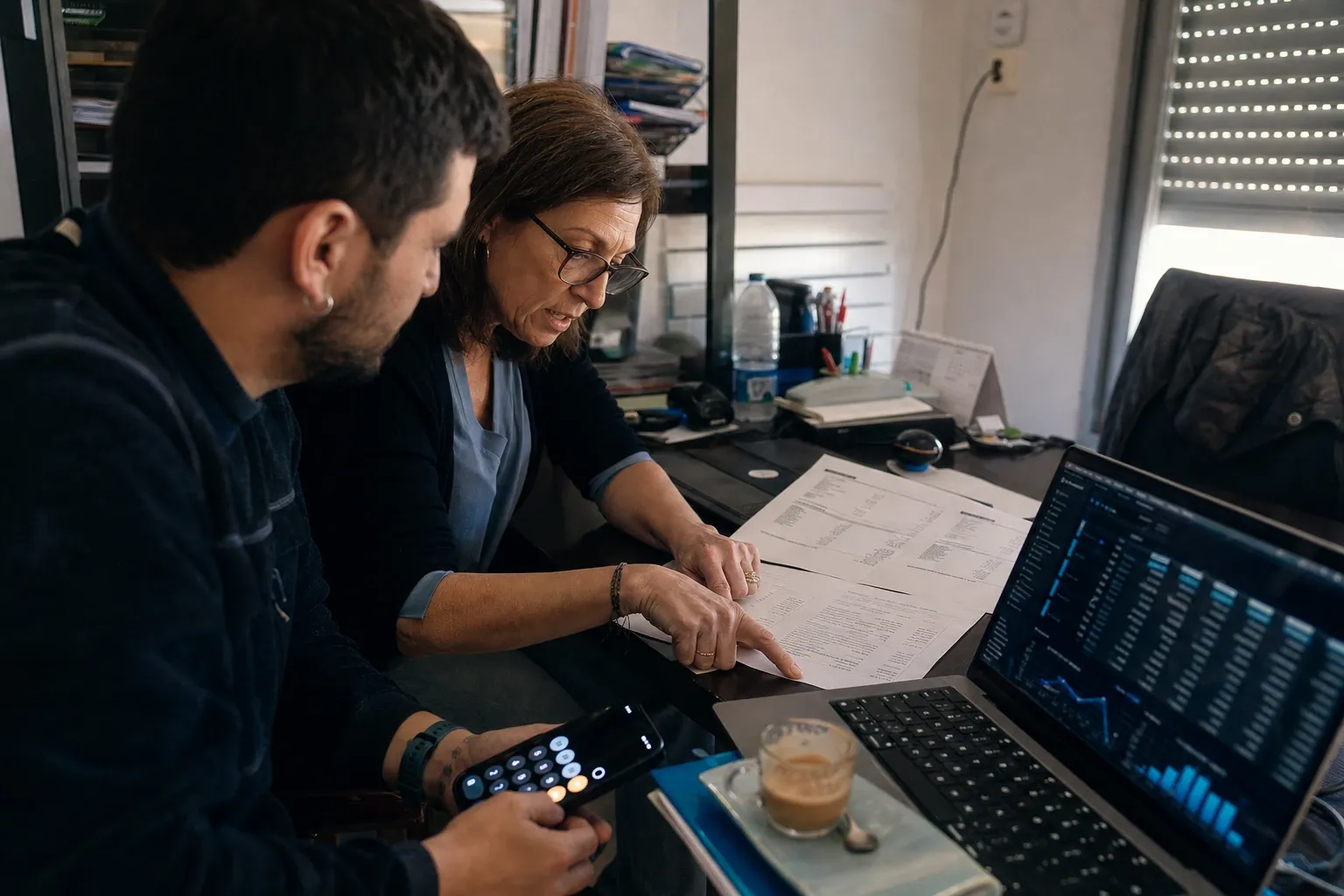
- Days 3 to 5: interviews with three to six people who do the work today, plus a reading of the real artefacts: spreadsheets, tickets, exports, analytics, the current site or app.
- Day 6: a checkpoint where we show the first architecture sketch and the open questions. This is where most projects change shape.
- Days 7 to 9: architecture, data model, risk register, effort and phasing, and the price.
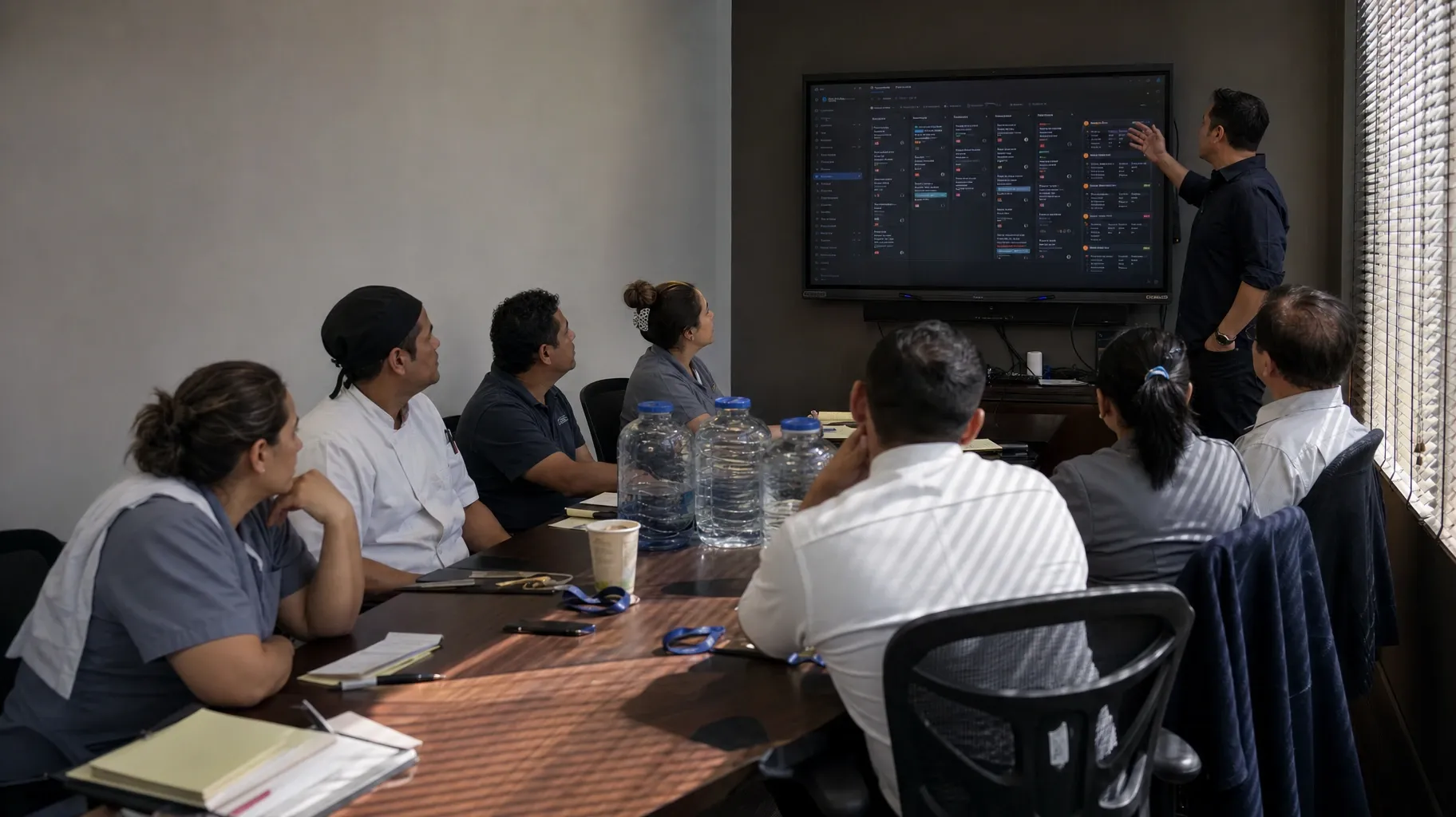
- Day 10: the pack is delivered and walked through, with the fixed price and the recommendation.
What we need from you is modest and not negotiable: one decision maker available for two sessions, read access to the relevant systems, and the person who knows how the process really works, not how the manual says it works.
What it costs, and what happens if you walk away
From 4,900 EUR, invoiced at the start, with half credited against the build if you go ahead within 60 days. The figure rises only when the discovery itself is larger, for example several countries, several existing systems or a regulated process, and that is agreed before you sign anything.
If you walk away, you keep everything. The pack is yours: scope, architecture, data model, risks, estimate and plan. No clause stops you handing it to another supplier, and it is written to be executed by any competent team rather than as a puzzle only we can solve. That is deliberate. A studio that has to hide the plan in order to keep the client has a problem with the plan.
Three outcomes are acceptable to us: you commission the build, you take the pack to someone else, or you decide not to build at all. The third has happened, and it was the right call.
When you should not buy one
Not every job needs two weeks of thinking. Say so early and we will too.
- A small, well-defined job with a written brief: we quote it directly.
- A site or app that works and needs looking after: that is CARE, a monthly retainer, not a build.
- You already have a validated specification from a previous supplier: send it, we will review it in a call and tell you whether a discovery would add anything.
- You need a decision this week: a discovery will not fit, and neither will a good build.
Discovery earns its fee when the problem is genuinely undefined, when several systems have to talk to each other, or when the cost of building the wrong thing is much larger than the cost of finding out.