
Industrial, technology and B2B
Websites that explain complex products to engineers, internal tools that retire the spreadsheet, integrations with the ERP you already run, and senior maintenance afterwards. For industrial and technical B2B companies in Europe and the Americas.
What usually goes wrong
- Our site looks fine, but no engineer can find the datasheet or the standard they came for.
- Half the company runs on spreadsheets, and the version that matters is on somebody's laptop.
- Support requests land in a shared mailbox. Nobody knows who owns them or how long they have been open.
- We pay for an ERP and still export to Excel to get anything useful out of it.
- The English version of the site is two product generations behind the Spanish one.
- Any change to the site goes through an agency and takes two weeks.
- When a customer asks ChatGPT about our technology, it answers with our competitors.
What we build
- Technical product sites in two or three languages, with a CMS your own team runs: product families, applications, news and jobs.
- Documentation centres: white papers, standards and user guides, with download tracking so you know what your market actually reads.
- Customer ServiceDesk: inbound and outbound email becomes tickets, assigned automatically by region or product line, visibility limited by role, ratings and metrics.
- Internal tools that retire spreadsheets: planning and Gantt, checklists per phase, incidents with photos, material reception, suppliers and people.
- Integrations with what you already run: ERP and CRM (including Odoo 18 Enterprise), Microsoft Entra ID single sign-on with directory sync, transactional email on your own domain.
- Pages machine-readable by answer engines: real HTML served to crawlers, structured data, hreflang and honest sitemaps.
- Care: a monthly retainer with an hours envelope, run through our multi-tenant ServiceDesk, with an autonomous fix agent handling the small recurring work.
What changes in this sector
Your buyer is an engineer. They arrive with a specification, not a need to be discovered, and they leave the moment the page fails to say which standard the product complies with. The sales cycle runs through distributors, OEMs and Tier 1 suppliers, so the website rarely closes the deal. It is what keeps you on the shortlist. On kd.tech, the semiconductor company we work with, 84% of visits come from a desktop and 71% from Windows. That is a design engineer at a workstation, comparing datasheets.
Two things follow. The public site has to explain complex products precisely, in at least two languages, with documentation a visitor can actually find and download. And the company behind it usually runs on spreadsheets and email: site reports in Excel, incidents in a WhatsApp group, support requests in a shared mailbox nobody owns. The usual patch, a WordPress site on one side and an ERP module on the other, leaves you with two systems that never speak to each other.
What we build
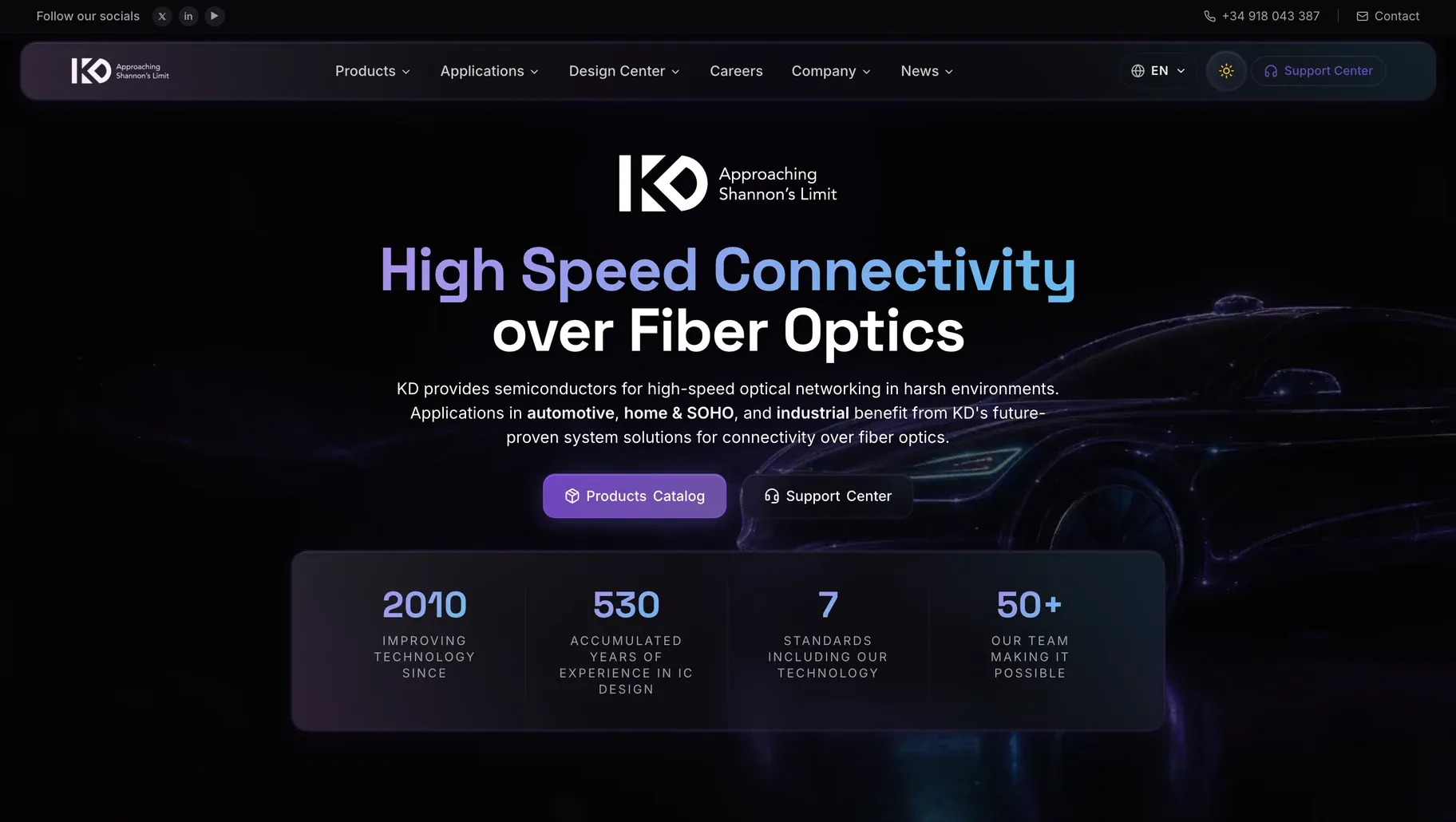
For kd.tech we replaced WordPress and a planned Odoo Community deployment with a single platform: a bilingual corporate site with its own CMS, a Design Center with white papers and download tracking, a customer ServiceDesk where every inbound email becomes a ticket and is assigned by region automatically, and an admin portal with first-party analytics alongside GA4 and Search Console. One codebase, three surfaces.
For a contractor that refurbishes hotels across Europe, Africa and the Americas, we turned five live operational spreadsheets into an internal operating system: a daily Gantt of sites, budgets with margin masked by role, checklists per phase, incidents with photos, and material reception that raises an incident by itself when a delivery does not match the order. Twenty-three tables, row-level security forced on all of them, an immutable audit trail, and an alert engine that emails each department every working day from the client's own domain.
What it costs
Every engagement starts with a paid Discovery Sprint, from 4,900 EUR over two weeks, with half of the fee credited against the build if it starts within 60 days. It ends with a closed scope and a fixed price. Internal and corporate platforms of this kind start at 12,000 EUR: the honest anchor is a Phase 1 of eleven modules at 12,000 EUR plus VAT, paid in ten monthly instalments. Afterwards, Care from 850 EUR per month, senior maintenance with an hours envelope run through our ServiceDesk. We do not bill loose hours or padded estimates.
How we prove it
kd.tech in production, August 2026: Lighthouse mobile scores 100 accessibility, 100 best practices, 100 SEO and 76 performance, median of three runs. AI crawlers used to receive an empty 3,559-byte shell; an article now returns around 10,900 bytes of real text. There are 155 automated tests and an external healthcheck every six hours. The move to a Supabase project of their own was verified item by item: 55 tables, 148 security policies, 371 of 371 stored files, no data lost.
The construction platform: a first testable version about a month after development started, then a multi-agent audit that produced 59 confirmed findings (one blocker, seven high) fixed and deployed before the client ever saw them. What we cannot show yet is adoption or return. The system went live in 2026 and we have no usage figures we would put in writing.
Proof
 KD.tech
One platform for a semiconductor company: site, ServiceDesk and admin portal on a single codebase
Polargate replaced KD.tech's WordPress site and a planned Odoo rollout with one React and Supabase platform holding the bilingual corporate site, a customer ServiceDesk and an admin portal, and now runs it on a monthly senior retainer.
2026Read the case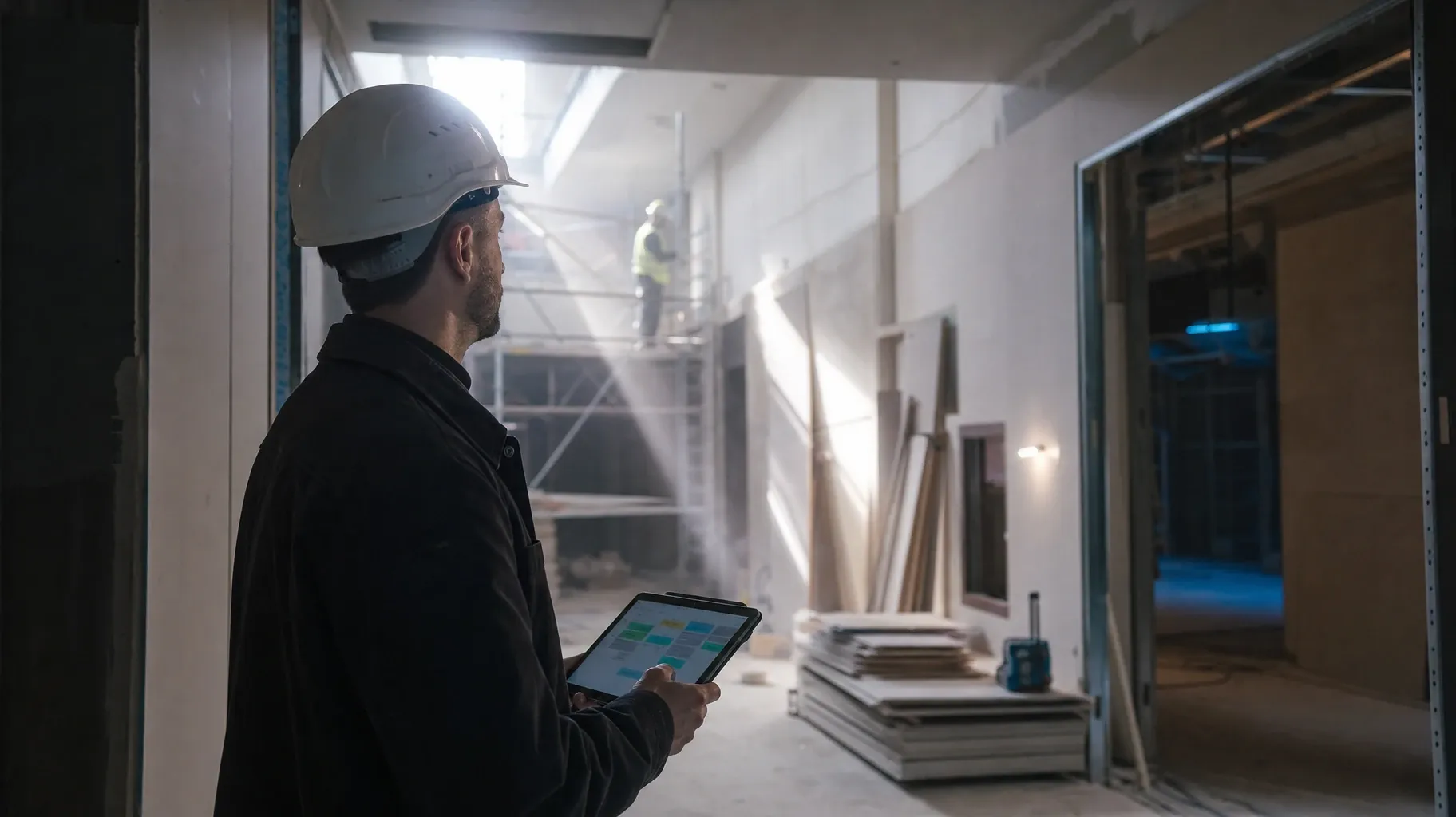 Elite Smart Build
A custom operating system for Elite Smart Build
Elite Smart Build, a Spanish hotel refurbishment contractor working in more than twenty countries, ran every site on spreadsheets and email. Polargate replaced that with eleven modules on Supabase and React: daily Gantt, role-masked margins, per-department alerts and material reception with automatic incidents.
2026Read the case
Questions, answered
Can you integrate with our ERP, or do we have to replace it?
How much does an industrial B2B website or internal platform cost?
How long before we have something we can actually use?
We already have WordPress. Do we have to move off it?
Who owns the code and the data when the project ends?
Start the engine
Tell us what you are building in a few short questions. A senior engineer answers in writing within 48 business hours, with a first take on scope, timeline and price.