
From a frozen line-up to an app that updates itself
A Spanish summer music festival had its line-up compiled into the app binary and its backend locked inside a no-code platform. Polargate rebuilt the foundation in four days, ten days before the season started.
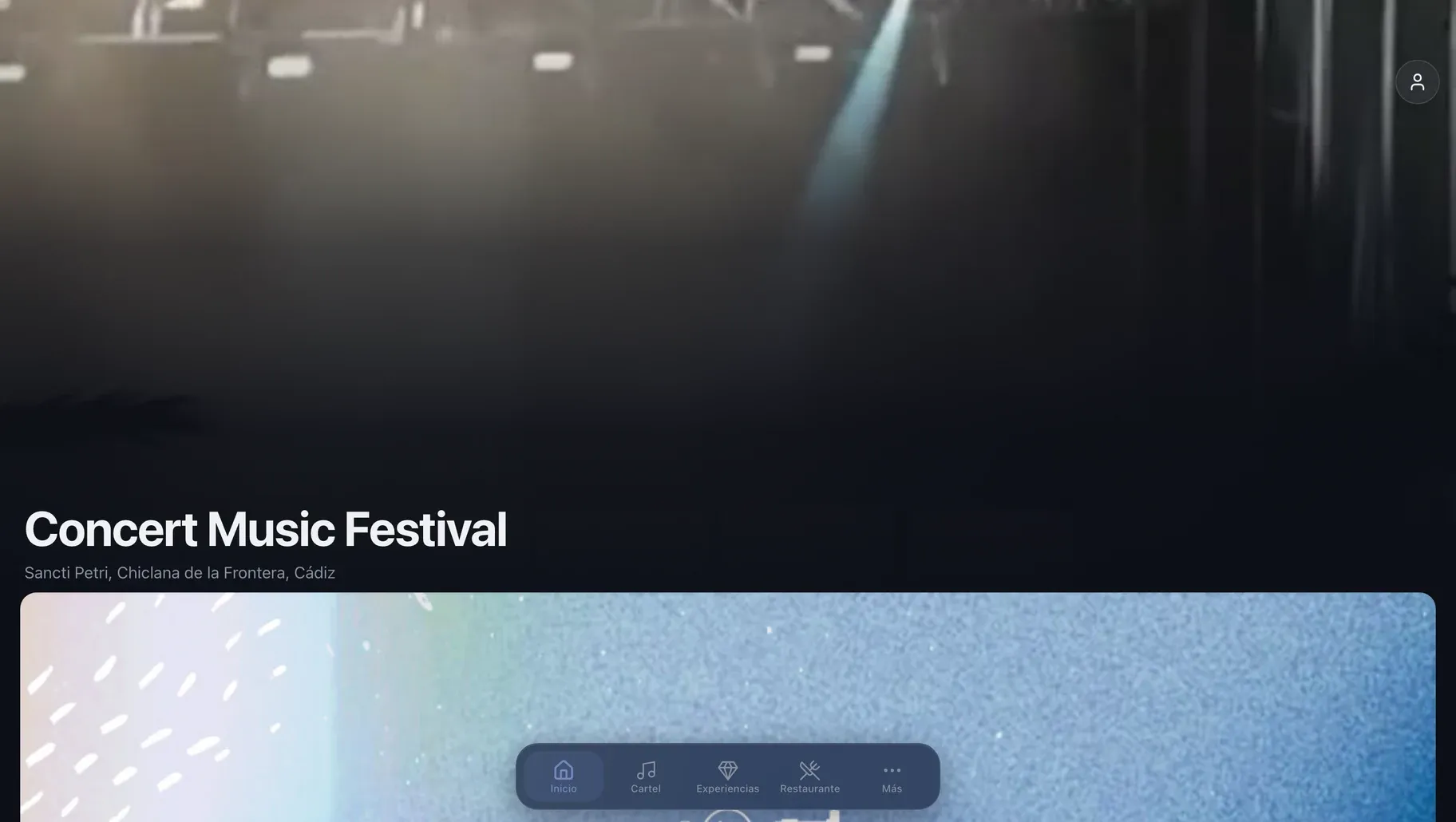
- 4
- days from diagnosis to the new backend running
- 62
- user accounts migrated with their IDs preserved
- 37
- shows synced from the website in the 2026 season
- 30 min
- sync interval between WordPress and the app
- 177
- countries where the Android app is available
- 106
- unit tests running on every change
The problem
The festival already had an official app in both stores, built on a no-code platform. The line-up was compiled into the binary, so adding an artist meant editing code and waiting for Apple and Google to review a new release. The app showed a line-up the website had already changed, and one headline act was missing entirely. The backend lived in a Supabase project the vendor would not hand over, push notifications had never delivered a single message, and the first show was ten days away.
What we built
Polargate found the root cause and rebuilt the foundation in four days. We moved the whole backend to a Supabase project we control: 31 migrations, 26 tables with row level security, 12 edge functions, 62 user accounts with their IDs intact, 265 gallery items and 603 storage files. We rewrote the content layer so the line-up is read live, and wrote a WordPress plugin plus an edge function that syncs every 30 minutes and copies images and PDFs into our own storage. Releases moved to the cloud: Xcode Cloud on iOS, GitHub Actions on Android, over the air updates for the rest.
The outcome
The 2026 season ran on the new stack. 37 shows between 10 July and 17 August stayed in step with the official website without anyone touching code. The Android app is live in 177 countries, and the iOS app was relaunched and now takes most changes over the air, with no store review. iOS push went from zero registered devices in six weeks to 149 once we added the two missing methods in the native app delegate. End of edition mode was designed, built and deployed in a single day.
Stack
- Capacitor
- React
- Vite
- TypeScript
- Tailwind CSS
- shadcn/ui
- TanStack Query
- Supabase
- PostgreSQL
- Deno
- Vercel
- WordPress
- GitHub
- GitHub Actions
- iOS
- Android
- Firebase
- Resend
- Vitest
- Playwright
The context
A summer music festival on the coast of Cádiz, with a season running from July to mid August, had an official app for iOS and Android built on a no-code platform. The team works in WordPress, where the line-up lives inside an events plugin, and assumed the app would follow. It did not.
What we found
Diagnosis on 30 June 2026, ten days before the first show:
- The line-up was hardcoded in the source and compiled into the store binary. Every change was a new release and a store review.
- The Supabase backend belonged to the no-code vendor's account and was effectively disconnected from the app.
- Push had never worked on iOS. The native app delegate was missing the two methods that hand over the device token, so six weeks of season went by with zero registered devices.
- The TypeScript check reported green because its configuration matched no files at all.
What we built
We moved the backend to a Supabase project we control and rebuilt the content path.
- Migration in four days: 31 migrations, 26 tables with row level security, 12 edge functions, 62 users and 62 profiles with their IDs preserved, 265 gallery rows, 6 videos, 603 storage files.
- A WordPress plugin we wrote exposes the current edition through a single endpoint, because the standard WordPress API does not return event dates and times. A Supabase edge function syncs it every 30 minutes, downloads images and PDFs into our storage, retries when the site firewall answers oddly, and is safe to run twice.
- Automated releases: iOS builds in Xcode Cloud from a git tag and submits itself through the App Store Connect API. Android builds, signs and uploads to Play production from GitHub Actions.
- Over the air updates with self-hosted capgo through Polargate's OTA Hub, with channels, rollout percentage and a minimum native version gate.
- Push rebuilt end to end: APNs directly on iOS, FCM HTTP v1 on Android, campaigns scheduled with Postgres cron, delivery auditing, a remote kill switch per platform and a circuit breaker that stops after two failed attempts.
How it runs now
The festival team publishes in WordPress and the app follows within half an hour, on both stores and on the web. React, Vite, TypeScript, Tailwind and shadcn/ui on the front, Capacitor 8 for the native shells, Supabase for data, auth, storage and functions, Vercel for the web. 106 unit tests and one end to end smoke test run on every change, and Sentry and Crashlytics report what breaks. Polargate keeps the app on a monthly maintenance retainer: content questions, store releases on both platforms, incident response, and the seasonal work of closing one edition and opening the next.
Questions about this project
How long does it take to move an app off a no-code platform?
Can you connect the app to our WordPress or to our ticketing system?
Can we update the app without an Apple review every time?
Do you take over an app that another agency or a no-code tool built?
What does it cost to keep a festival app running after launch?
Start the engine
Tell us what you are building in a few short questions. A senior engineer answers in writing within 48 business hours, with a first take on scope, timeline and price.