
Build
BUILD is Polargate's delivery line for custom software: websites, products, internal portals, mobile apps, AI features and integrations. Scope and price are settled in a paid Discovery Sprint, the build is fixed price, and the first iteration reaches production in four to eight weeks.
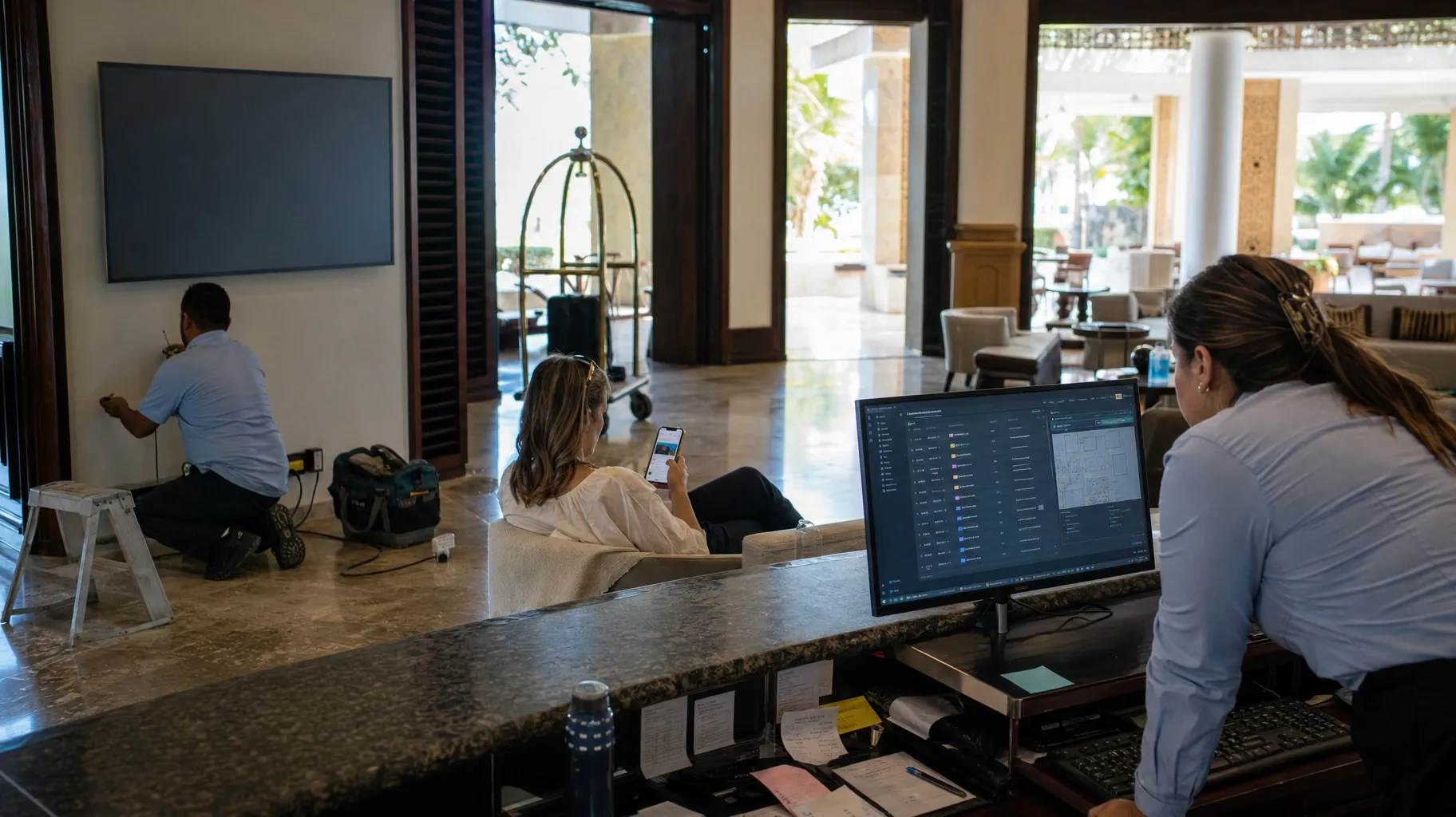
- 4-8
- Weeks to the first iteration in production
- 59/59
- Audit findings confirmed and fixed before an internal platform release
- 100/100/100
- Lighthouse accessibility, best practices and SEO on a delivered site, measured in production
- 0
- Records lost migrating a client project to its own backend
Capabilities
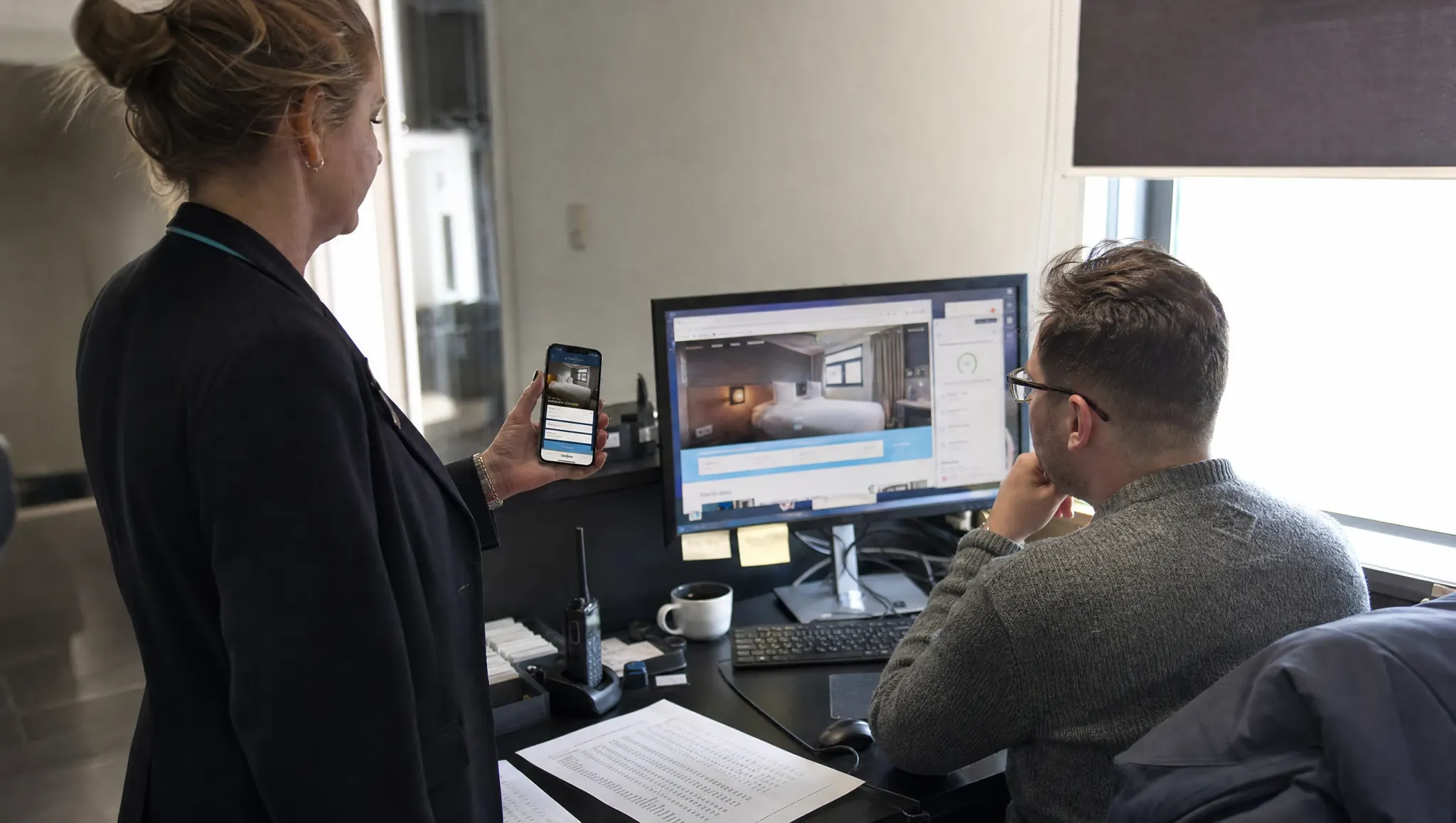 Static HTML sites that people, search engines and AI assistants can all read.
Websites
Marketing and multilingual websites pre-rendered to static HTML, with technical SEO, hardened forms and analytics built in. Yours to own: your repository, your Supabase, your Vercel.
From 7,600 EUR for a hotel or small company site. Up to 12,000 EUR with brand identity included.See the service Assistants that answer from your data, agents that act, limits written down.
AI features and agents
Multilingual assistants grounded in your own knowledge base, agents that take real actions through tools, and the evaluation and guardrails that make them safe to put in front of customers.
From 9,900 EUR for a first AI feature in production, fixed price. Discovery Sprint from 4,900 EUR. Care from 850 EUR per month once it is live.See the service Your operations, out of the spreadsheet and into a real application.
Web apps and internal portals
Internal portals, back office apps and operating systems built on Supabase, with row level security, roles, audit logs and Microsoft single sign on. Fixed price for a first phase, senior led from discovery to launch.
From 12,000 EUR fixed for a first phase, typically 12,000 to 25,000 EUR, payable in six to ten monthly instalments. Discovery Sprint from 4,900 EUR, half credited against the build if it starts within 60 days. Care from 850 EUR per month after launch.See the service The systems you already pay for, working as one
Integrations and automation
We connect your PMS, CRM, ERP, booking engine, email and payment systems, then remove the manual work around them with scheduled jobs, webhooks and data pipelines that run server side and log every call.
From 4,900 EUR for an integration and automation build, fixed price, after a Discovery Sprint from 4,900 EUR (half credited against the build if it starts within 60 days). Running and evolving it under CARE from 850 EUR per month.See the service One codebase, two stores, updates in minutes.
Mobile apps
iOS and Android apps built with Capacitor or Expo from one codebase, published to both stores, with push, deep links, automated releases and over-the-air updates from Polargate's own OTA hub.
From 9,900 EUR to take a working prototype to production in both stores, typically 9,900 to 14,900 EUR. The Discovery Sprint has its own fixed price, and half of it is credited against the build if it starts within 60 days.See the service Voice agents that do the work, not just read an answer out loud.
Real-time voice agents
Conversational voice agents built on your own backend: they verify who is speaking, read real data from your database and write back to the same systems your team uses. Our hotel agent runs 11 to 12 server tools against the same database functions as the app. Published as a pilot: no live phone line yet, and turn based, not full duplex.
Scoped and priced in a fixed price Discovery Sprint, from 4,900 EUR, which ends with a closed price for the build itself. What moves that price is the number of actions the agent has to execute, not the voice. The voice provider's own usage is billed separately. Running it afterwards goes under Care, from 850 EUR per month.See the service Your company's memory for working with AI, so no session starts from zero again.
Polar Brain
A memory for your company that survives the chat window. What gets decided is filed on the spot, searched by meaning and pulled back by the next session before it answers. Built inside your business and connected to the Claude your team already uses.
No public price list. Polargate quotes each engagement after a first look at the history to ingest and the systems to connect, and does not publish an hourly rate.See the service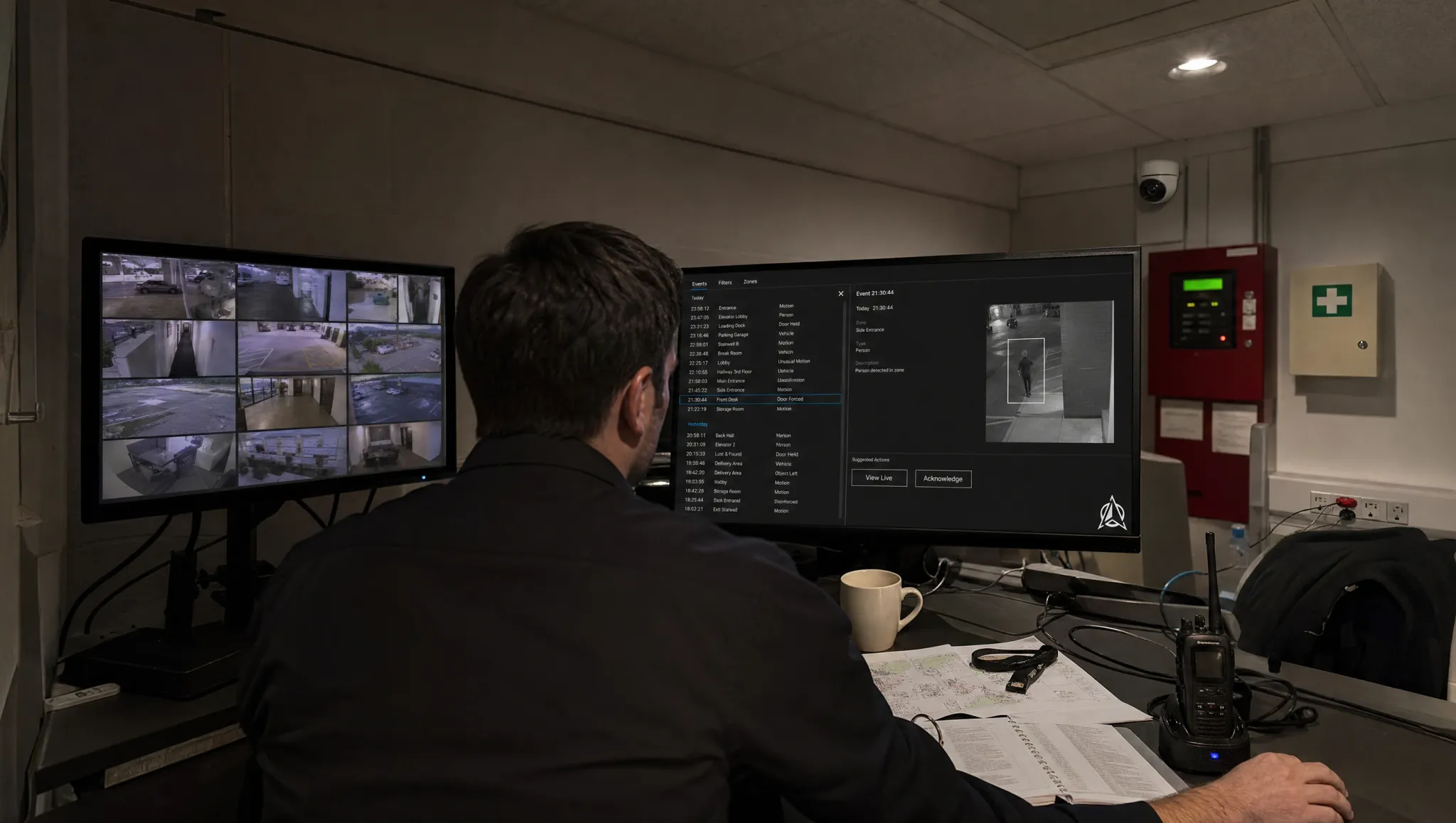 The software layer over the cameras, sensors and drones you already have. The hardware is not ours.
Camera, drone and building software
Polargate builds the software layer over third party systems, and we are publishing that layer for equipment somebody else made: cameras, sensors, access control, climate, lighting and the data a drone flight leaves behind. The part we would build here takes an event, puts it in the right queue, sets the alarm off on the phone of whoever is on shift, keeps a record of what each person saw and when, and decides in the database who is allowed to see it. That mechanism is proven on guest requests and on tasks, not yet on devices. The hardware, the installation and the manufacturer licences are supplied by you or by your integrator, in your name. We publish this as a new capability, the way we published our voice agents. What is already in production on other Polargate projects is the operations panel with a queue per department and the alarm on the phone of whoever is on shift, the scheduled connector reading a third party system, roles resolved in the database with an immutable audit log, photo capture inside a real field process in a mobile first web application, and native apps published in both stores on a separate project. What we have never done is watch a camera, a sensor or a controller, and we have not delivered a camera, drone or building automation project yet.
Discovery Sprint from 4,900 EUR, half credited against the build if it starts within 60 days. A first phase is fixed price from 12,000 EUR. Care from 850 EUR a month afterwards. The price does not depend on how many cameras or sensors you have, because our work is the software over them, not the count of them.See the service
How it works
- 01Week 1 to 2
Discovery Sprint
Interviews with the people who will use the thing, an audit of the systems you already run, a data model, an architecture decision and a scope written in plain language. It ends with a fixed price and a delivery plan, and the document is yours whether or not you continue.
- 02Week 2 to 4
Foundations
Design direction, database schema with row level security from the first migration, environments, continuous integration and the first screens in a place you can open. Nothing is built on a platform you cannot leave: the repository, the backend and the hosting are created in your accounts.
- 03Week 4 to 8
Build to the first shipped iteration
Weekly deployments, a short written update with each one and a running list of decisions. The goal of this stage is a version in production with real data where someone can finish an actual task, not a demo. Scope changes are priced before they are built.
- 04Week 8 onwards
Audit, launch and handover
Several review passes over correctness, architecture, accessibility, performance and security, with every finding checked by a second reviewer before it counts as real. Then the launch, the handover pack and, if you want it, a move to the CARE retainer for maintenance and evolution.
What BUILD is
BUILD is the line where Polargate writes software: public websites, customer products, internal portals, iOS and Android apps, AI features and integrations with the systems you already run. Senior engineers do the work and use AI inside it, in their own tooling, instead of selling it as a separate product. Every project ends with the code, the database and the hosting in accounts your company owns.
Who it is for
Mid-market companies, roughly 50 to 500 people, that have outgrown their current site or run part of the operation in spreadsheets and shared inboxes. Common starting points: a marketing site nobody can edit without fear, a multilingual site for several markets, an internal tool that has to replace a manual process, an app for guests or customers, or an AI assistant that answers from your own data instead of guessing. Polargate works natively in English, Spanish and Dutch, for clients in Europe and the Americas.
How it works
Every engagement starts with a paid Discovery Sprint: two weeks of interviews, an audit of what you already have, a data model, an architecture decision and a scope you can say no to. It ends with a fixed price for the build, calculated from evidence rather than from a first meeting.
The build then runs in weekly deployments to an environment you can open at any time. The first shipped iteration lands between week four and week eight. It is not a prototype, it is a version in production with real data behind it. Before a release goes live it passes an audit loop where several review passes look for bugs, architecture problems, accessibility failures, slow pages and security holes, and every finding has to survive a sceptical second reading to count. On one internal platform, that pass left 59 confirmed findings: one blocker, seven high, twenty five medium and twenty six on user experience and accessibility. All of them were fixed and deployed.
What it costs
The Discovery Sprint is fixed price, from 4,900 EUR, and you keep everything it produces even if you stop there. The build itself is quoted at a fixed price once Discovery is done. As a reference from past projects, a multilingual site with its own backend starts from 7,600 EUR, and the first phase of an internal operations platform from 12,000 EUR. Work after launch moves to a monthly CARE retainer, priced separately.
What you get
A working product in your own accounts: Supabase for the database, Vercel for hosting, GitHub for the code, your own developer accounts on the App Store and Google Play. Row level security on every table, HTTP security headers, real server-rendered HTML for every route so search engines and AI assistants can read the page, and a handover pack with environment variables, admin accounts and the audit report. If you decide to continue with another team, nothing has to be rebuilt.
Proof
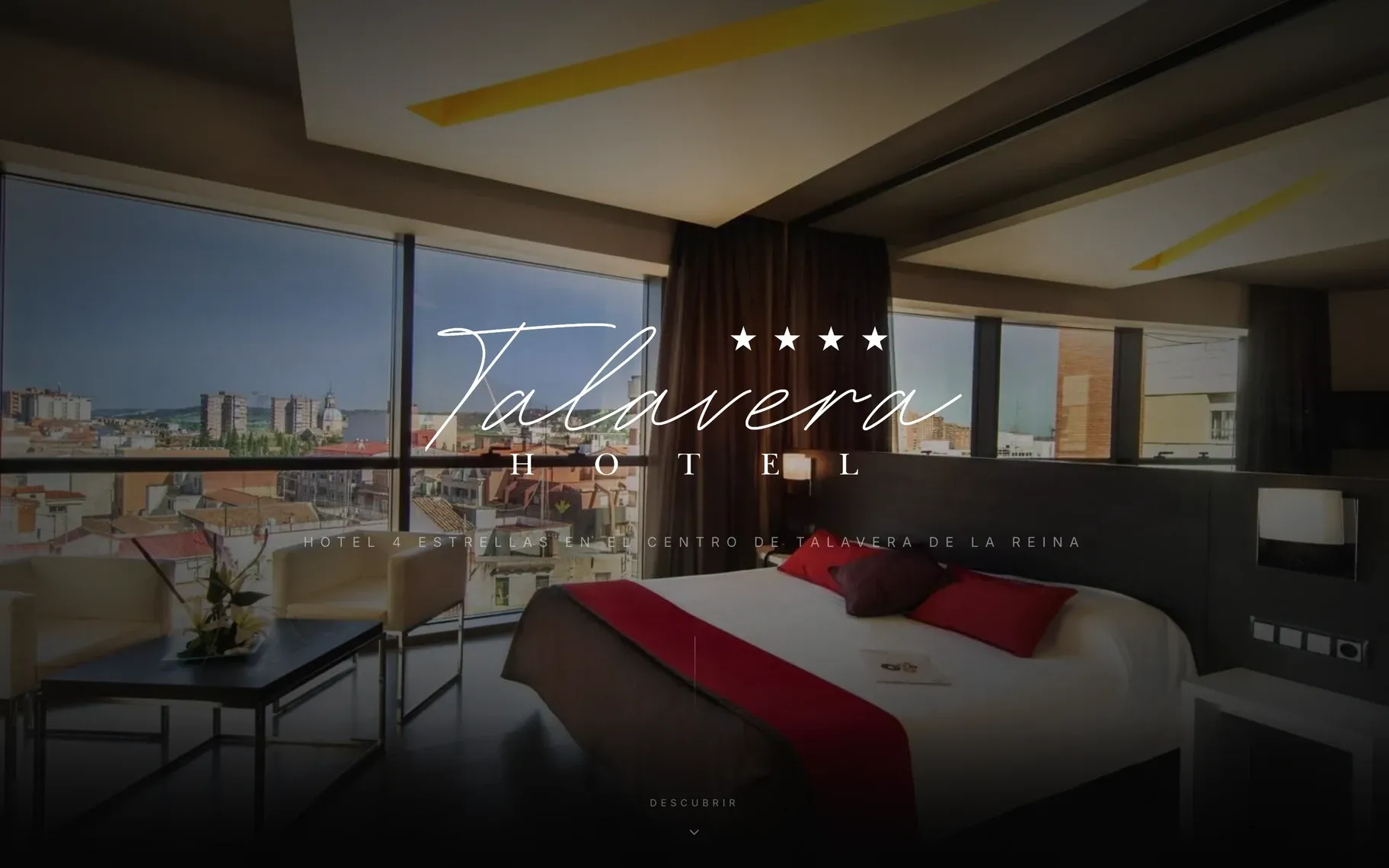 Hotel Talavera
A bilingual hotel website that crawlers and AI assistants can read
A 4-star city hotel in Castilla-La Mancha had a website that search engines received as an empty container. Polargate rebuilt it as 16 pre-rendered bilingual URLs and now runs it on a monthly Care retainer with a recurring audit loop.
2026Read the case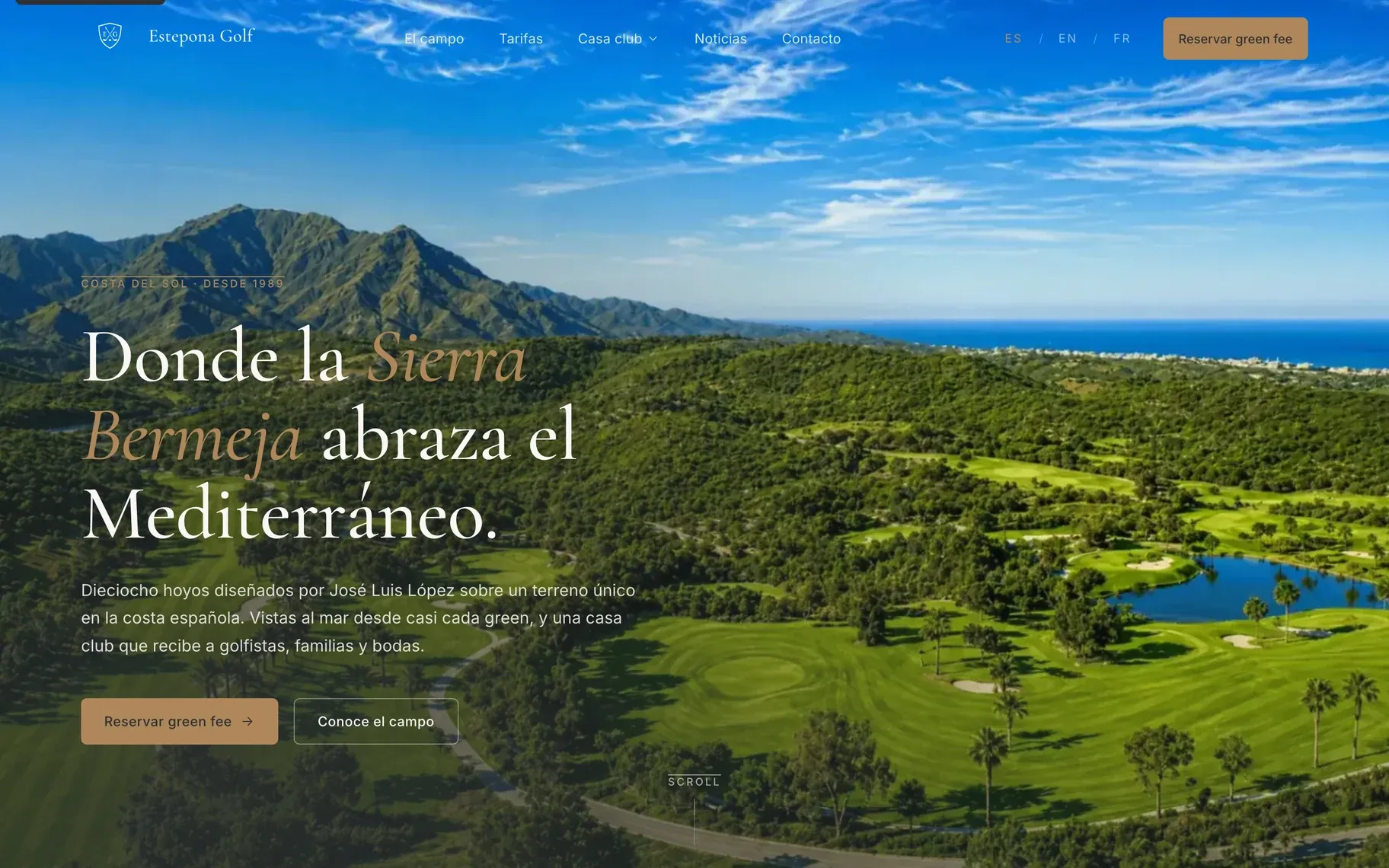 Estepona Golf
Estepona Golf: a trilingual course website with a real handicap calculator
A new website for an 18-hole course on the Costa del Sol, built from scratch in Spanish, English and French, with its own Supabase backend, a news manager the club controls and a WHS course handicap calculator fed with official federation data.
2026Read the case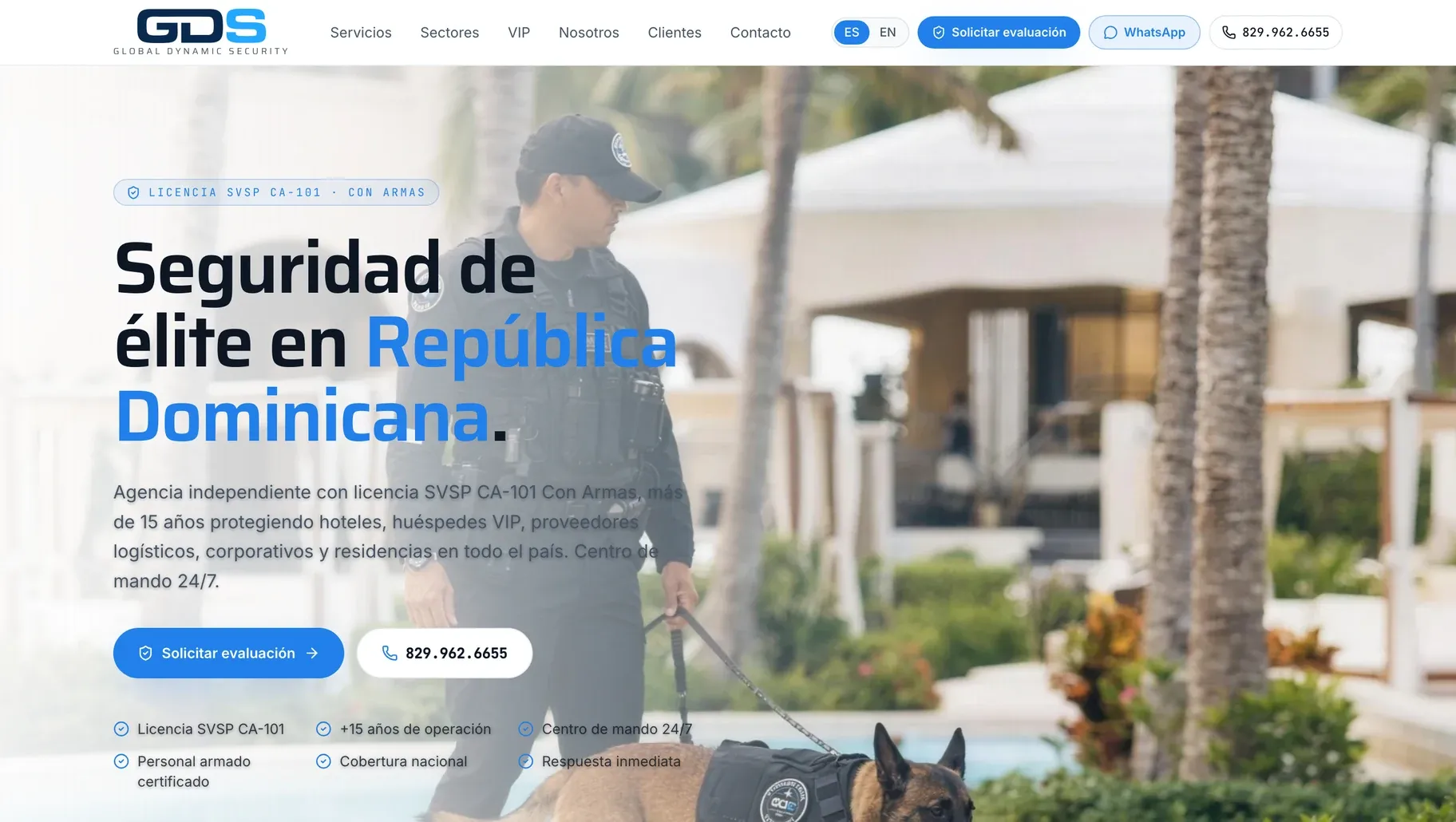 Global Dynamic Security Group
Brand and bilingual site for Global Dynamic Security Group
Brand identity, a 15-page identity manual and a bilingual Spanish and English corporate site for Global Dynamic Security Group (GDS), a security services group in the Dominican Republic, delivered as one fixed-price project.
2026Read the case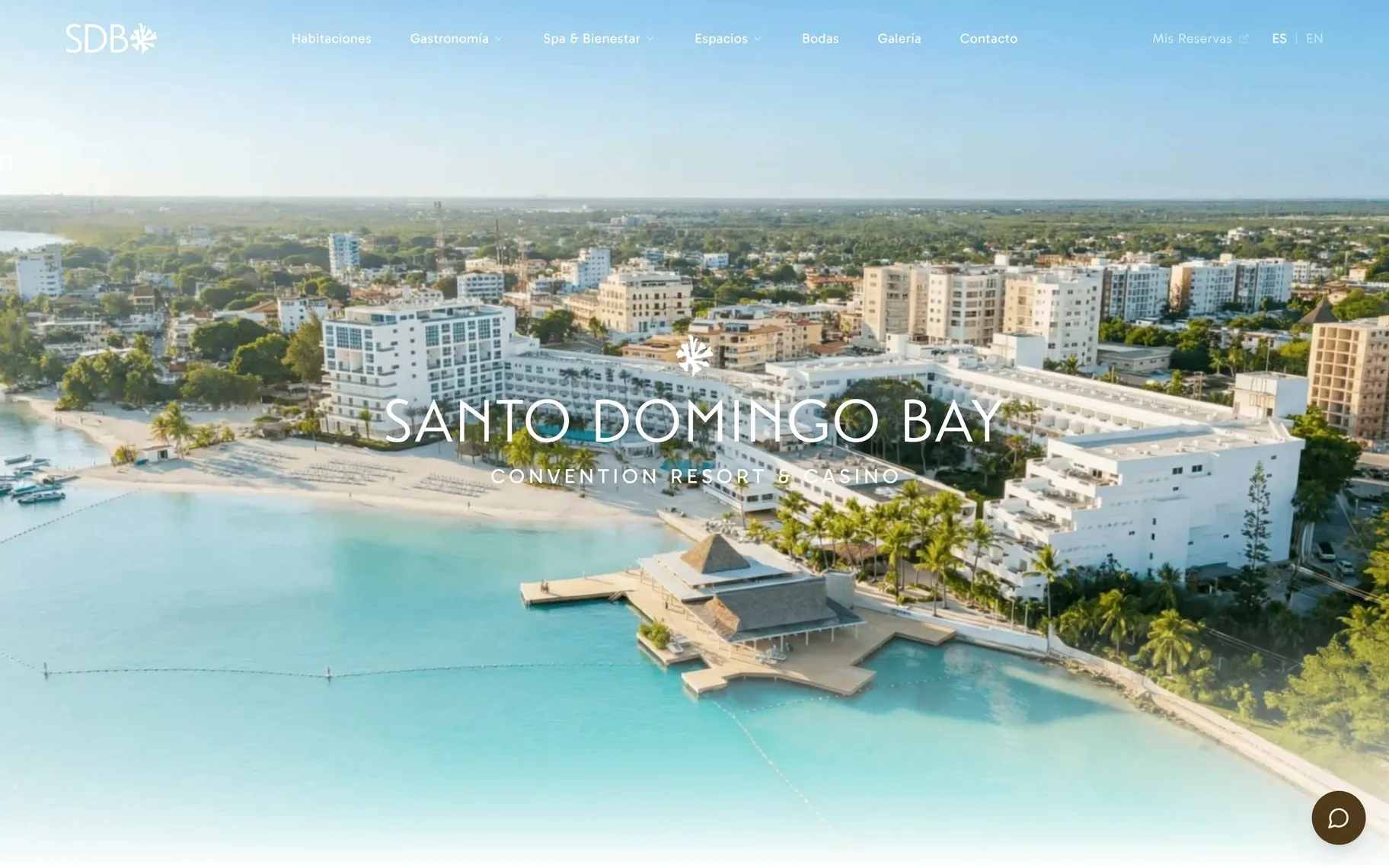 Santo Domingo Bay
A Caribbean resort site rebuilt as static HTML, with an AI concierge behind it
Polargate rebuilt the bilingual website of a Caribbean convention resort and casino on Vite, React and its own Supabase project, prerendered the 38 Spanish and English routes to static HTML, and connected the hotel to Estevano, whose AI concierge handles real guest requests in six languages.
2026Read the case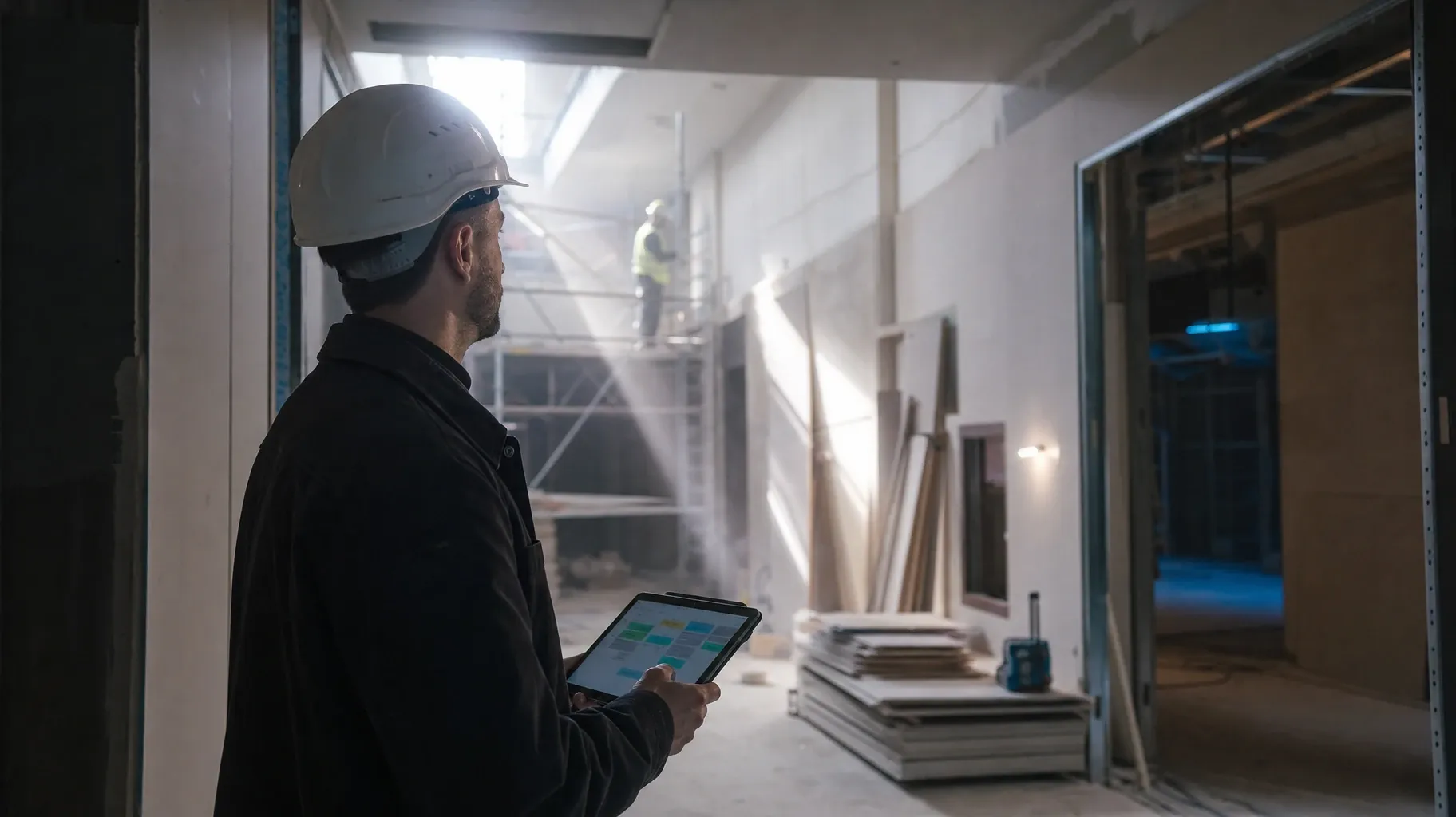 Elite Smart Build
A custom operating system for Elite Smart Build
Elite Smart Build, a Spanish hotel refurbishment contractor working in more than twenty countries, ran every site on spreadsheets and email. Polargate replaced that with eleven modules on Supabase and React: daily Gantt, role-masked margins, per-department alerts and material reception with automatic incidents.
2026Read the case
Questions, answered
How much does it cost to build a custom website or internal platform?
How long until we have something live?
How is Polargate different from a traditional digital agency?
Do we own the code and the data?
Can you integrate with the systems we already use?
What happens after launch?
Start the engine
Tell us what you are building in a few short questions. A senior engineer answers in writing within 48 business hours, with a first take on scope, timeline and price.