
Hotels and hospitality
Polargate builds hotel websites that people, Google and AI assistants read the same way, integrates the booking engine and PMS you already run, and adds Estevano, a multilingual AI concierge for in-stay requests. Then it keeps all of it correct on a monthly care retainer.
What usually goes wrong
- Half our bookings come through an OTA and we pay commission even for guests who searched for us by name.
- The site looks fine to me, but when you ask ChatGPT about the hotel it gets the answer wrong, or does not mention us at all.
- Reception answers the same twenty questions every day, in five languages, and at night there is one person at the desk.
- Requests live in somebody's WhatsApp: the towel, the late checkout, the air conditioning that does not cool. Nothing is recorded.
- The website still advertises something the room no longer has, and nobody knows who edits that page.
- We changed booking engine and the agency wanted to rebuild the entire website.
- Reviews talk about how long it took to sort out, and I have no number to answer with.
What we build
- Bilingual or trilingual hotel websites where every route is prerendered to static HTML, with hreflang, one H1 per page and schema.org (Hotel, HotelRoom, Restaurant, EventVenue, FAQPage) generated from a single data file.
- Booking engine integration that keeps the engine you already use, Paraty Tech in production on two hotel sites, with the reserve action visible both on the page and in the structured data.
- Estevano, the multilingual AI concierge and guest app: chat in six languages, tickets classified by department, restaurant and spa reservations, and room service charged to the room.
- A staff console with a real-time ticket board per department, response and resolution times, roles, and modules switched on or off per property.
- PMS integration: guest sync from Oracle Opera Cloud every five minutes, or QR and token access for a property with no PMS to connect to.
- Lead funnels for weddings and events: a multi-step wizard, an automatic dossier PDF, a notification to the manager and every enquiry recorded with its source.
- AI search readiness and CARE: robots policy for the answer crawlers, llms.txt, HTTP security headers, hardened forms, and a monthly audit delivered as a written report.
What changes in this sector
A hotel website has to win the booking before an OTA does, and it now has to do that twice: once for the person comparing three properties in three browser tabs, and once for the assistant that reads the page on their behalf and answers in a single paragraph.
That second reader is unforgiving. GPTBot, OAI-SearchBot, Claude-SearchBot and PerplexityBot fetch raw HTML and do not execute JavaScript. A hotel site built as a single-page app hands them an empty shell. On one Caribbean convention resort we took over, Google had indexed 4 of about 30 pages before we rebuilt the site as static HTML.
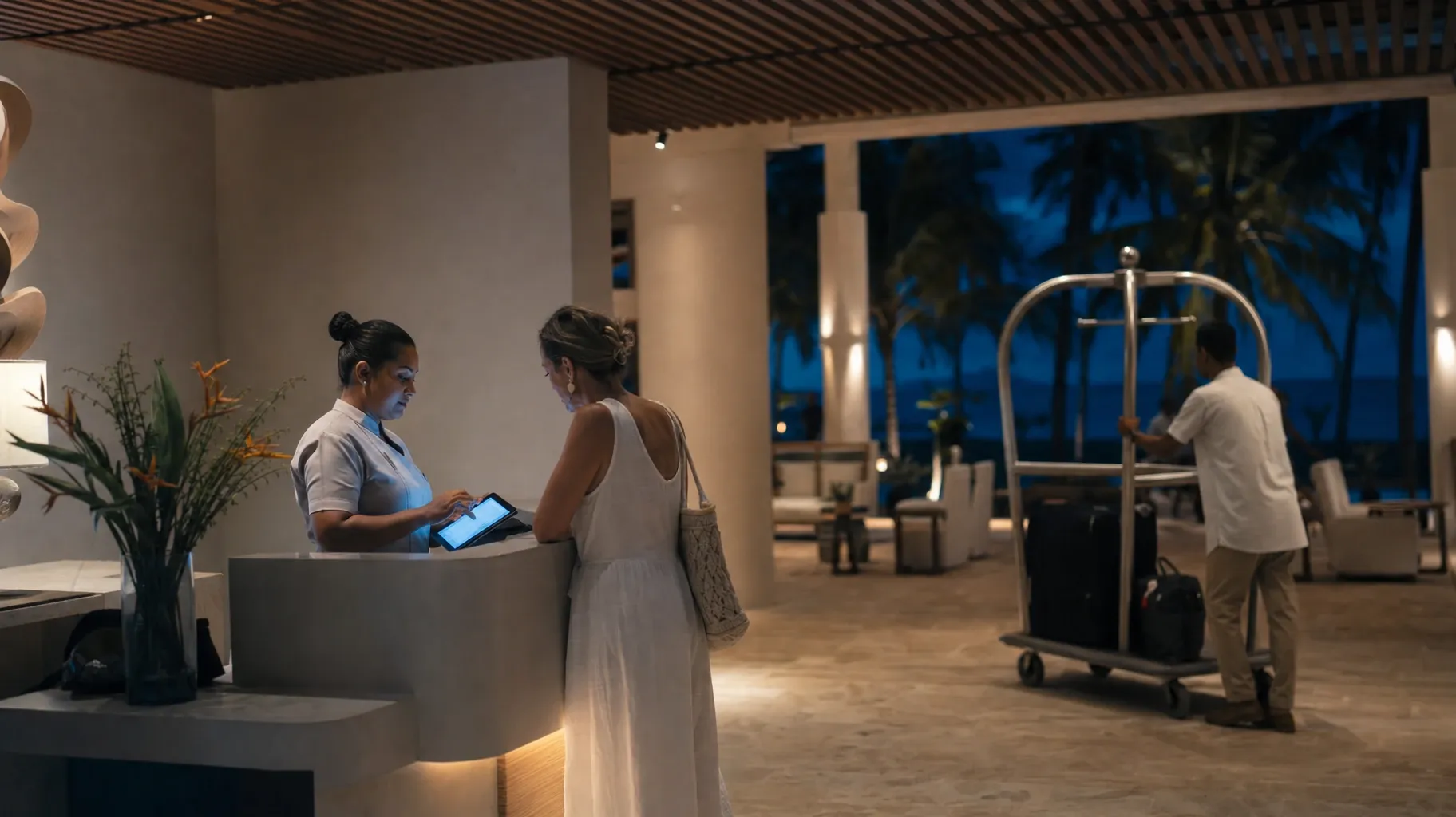
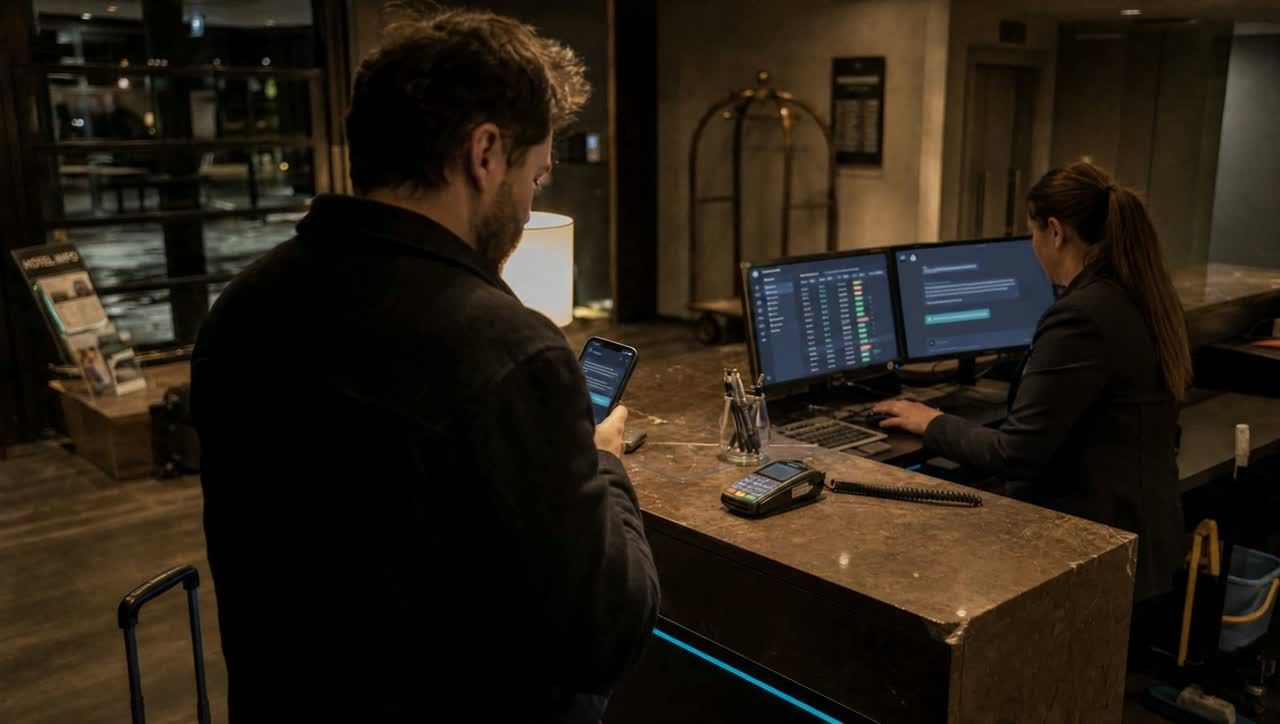
The rest of the problem starts after the booking. Reception absorbs towels, late checkouts, restaurant tables and maintenance calls in five or six languages, at exactly the hours when the desk is thinnest. That work rarely fails loudly. It leaks into the reviews.
We work with independent hotels and groups of 3 to 50 properties in Spain, the Caribbean and Latin America, in English, Spanish and Dutch.
What we build
Static HTML websites: every route and every language is generated at build time, with hreflang and structured data (Hotel, HotelRoom, Restaurant, FAQPage) written from a single data file, so the text a guest sees is the text Google and the assistants read. We integrate the booking engine you already pay for, Paraty Tech on both hotels on this page, so neither the reservation flow nor the revenue rules change.
On top of that sits Estevano, our own multi-tenant hotel platform. A guest enters through a QR code in the room or a link sent at check-in and talks to an AI concierge in six languages: it classifies the request by department, opens a ticket, books the restaurant or the spa, and takes room service orders charged to the room. Staff work from one console. Guests sync from Oracle Opera Cloud every five minutes, and a property without a PMS runs on token access instead.
Then a monthly CARE retainer: senior maintenance, a monthly audit and evolution, so the site does not decay between seasons.
What it costs
A hotel website starts from 7,600 EUR, which is the base price both sites on this page were built for: design, development, booking engine integration, technical SEO, security hardening and analytics setup. Before that comes a paid Discovery Sprint from 4,900 EUR that fixes scope, architecture and a closed price, with half credited against the build if it starts within 60 days. After launch, CARE from 850 EUR per month, minimum three months. Estevano is licensed per property, according to the modules you switch on, and quoted when Discovery ends. Hosting and database are yours at cost, usually tens of euros a month, paid directly.
How we prove it
Hotel Marien Puerto Plata, a 349-room all-inclusive in the Dominican Republic, serves 22 prerendered routes in Spanish and English on its own Supabase, with an automated audit on the first day of every month. The August 2026 cycle confirmed and fixed 33 findings, and an unverifiable 4.7 rating was replaced with the real TripAdvisor figure, 4.2 out of 5 across 9,239 reviews.
A 4-star city hotel in Spain went from a single page to 16 indexable URLs and 27 published FAQs. A 55-agent audit confirmed 48 findings with none refuted, 16 of them real bugs: English pages served as Spanish, coordinates 430 metres off the building.
At the Caribbean convention resort, Estevano handled about 2,500 guest requests in four months: median first response 3 minutes, median resolution 16 minutes, and 93% opened by the guest without queuing at reception.
Proof
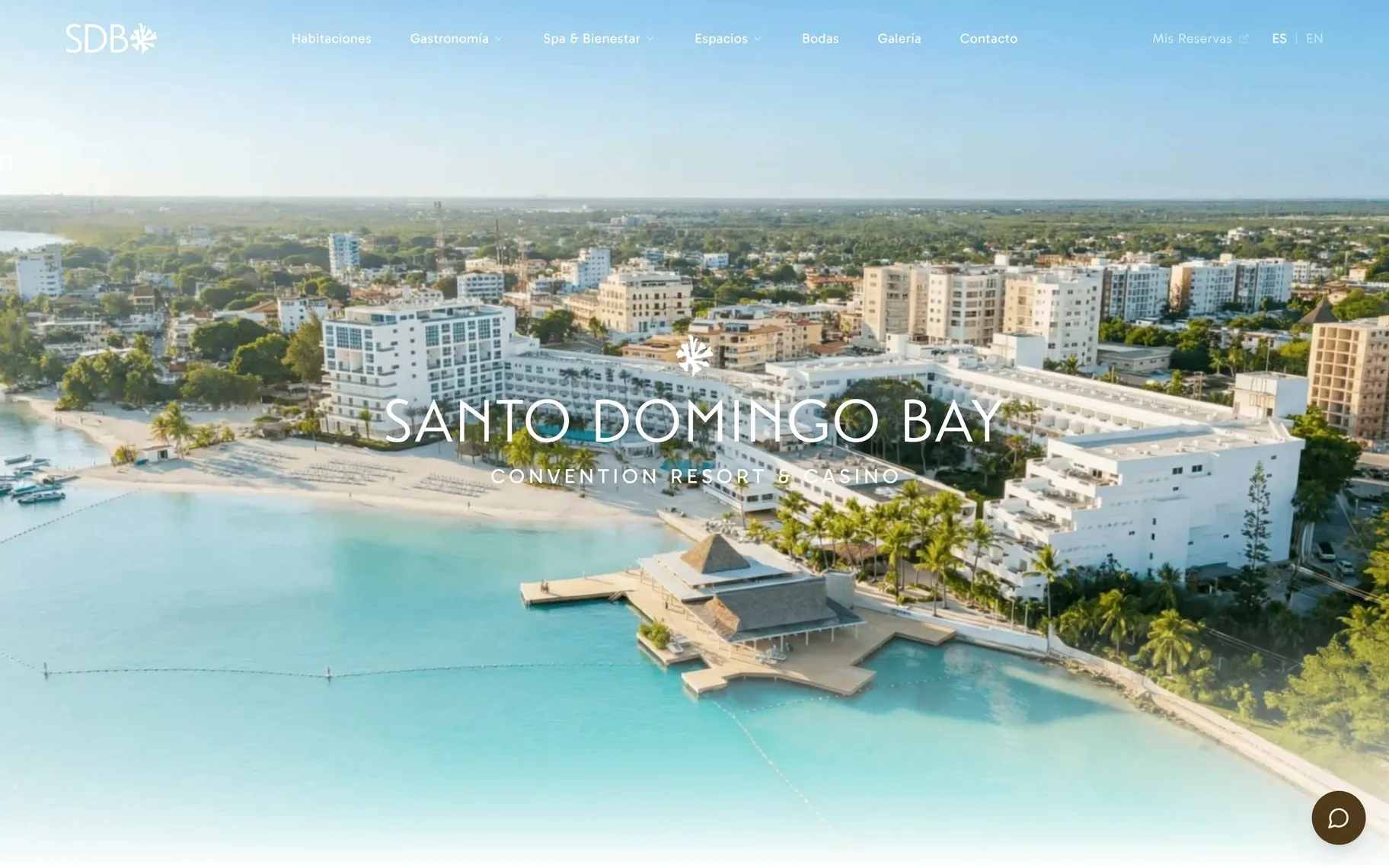 Santo Domingo Bay
A Caribbean resort site rebuilt as static HTML, with an AI concierge behind it
Polargate rebuilt the bilingual website of a Caribbean convention resort and casino on Vite, React and its own Supabase project, prerendered the 38 Spanish and English routes to static HTML, and connected the hotel to Estevano, whose AI concierge handles real guest requests in six languages.
2026Read the case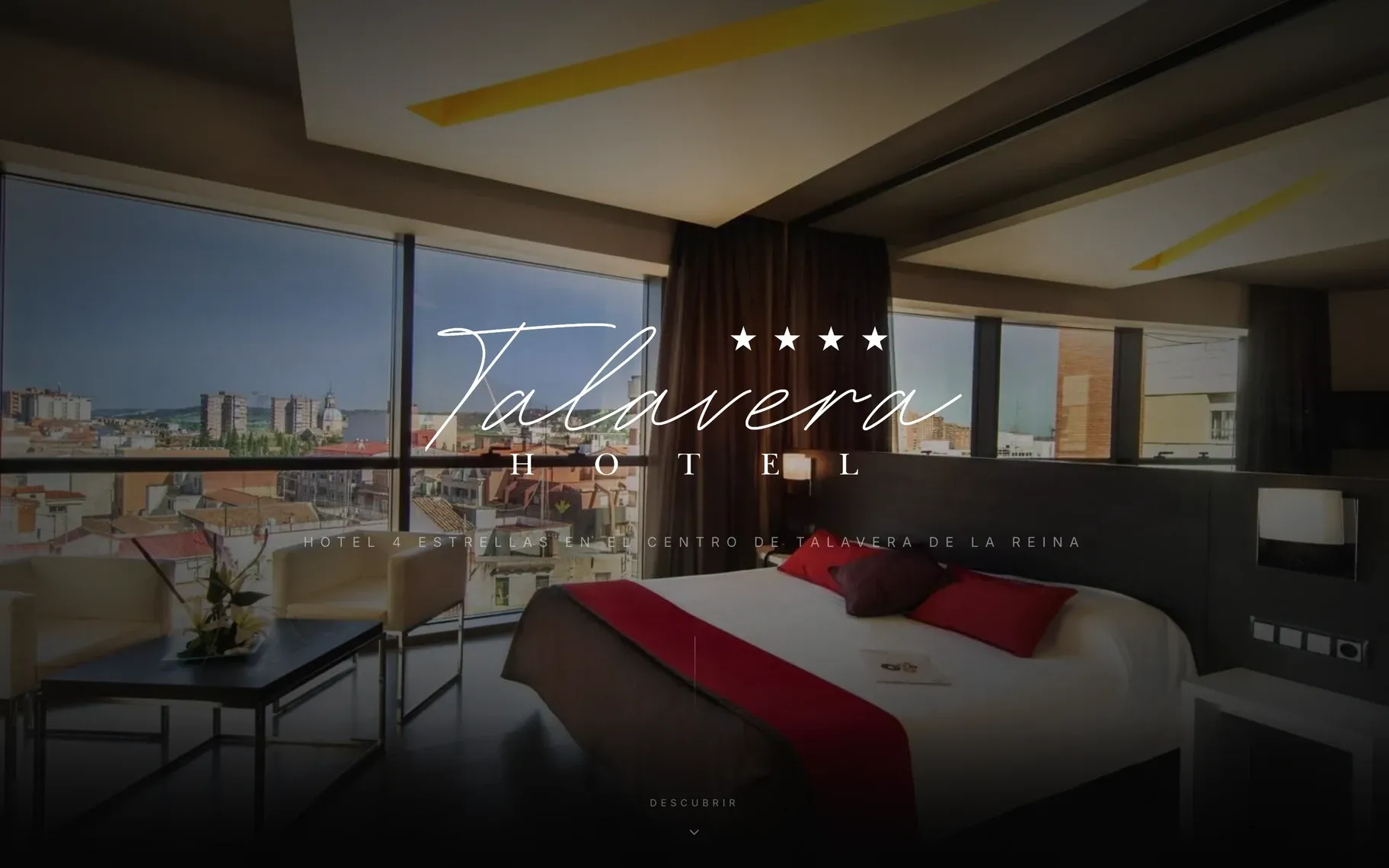 Hotel Talavera
A bilingual hotel website that crawlers and AI assistants can read
A 4-star city hotel in Castilla-La Mancha had a website that search engines received as an empty container. Polargate rebuilt it as 16 pre-rendered bilingual URLs and now runs it on a monthly Care retainer with a recurring audit loop.
2026Read the case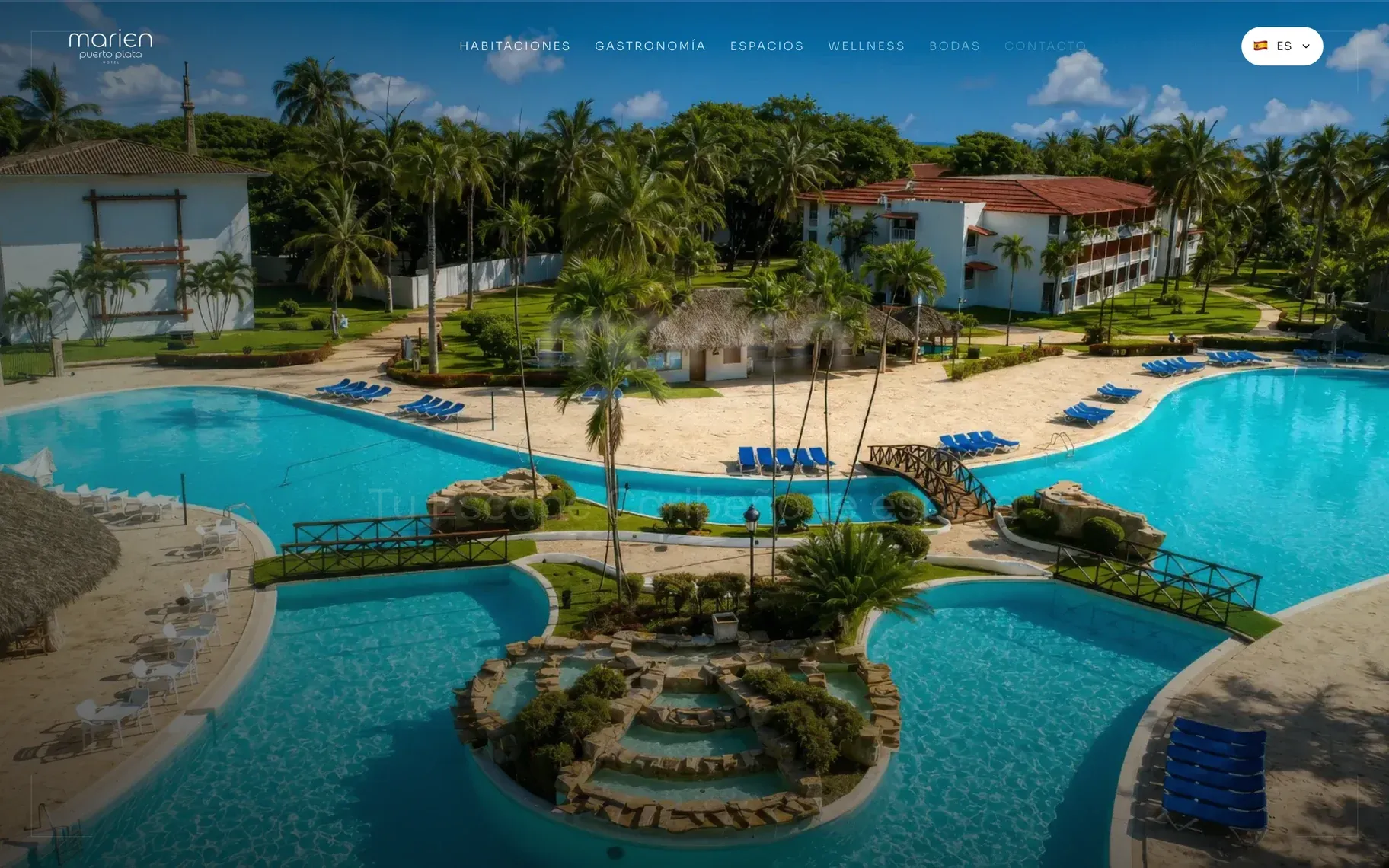 Hotel Marien
A resort website that Google, social scrapers and AI assistants can actually read
Polargate turned the bilingual website of a 349-room Caribbean resort into a fully static, hardened site with structured data for AI search, and keeps it under a monthly care retainer with an automated audit on the first day of every month.
2026Read the case
Questions, answered
Can you integrate with our booking engine and our PMS, or do we have to change them?
How much does a hotel website cost?
Will ChatGPT recommend our hotel if we do this?
Do we need a new website to use the AI concierge?
How many languages does the concierge speak, and what happens when it does not know the answer?
How long does it take to go live?
Start the engine
Tell us what you are building in a few short questions. A senior engineer answers in writing within 48 business hours, with a first take on scope, timeline and price.